About the Successive Lamas of
Tsum Ngak Labrang
the Lineage of the Great Terton Guru Choekyi Wangchuk,” called
“Mirror of Remembering the Ancestors”
1. Guru Choekyi Wangchuk
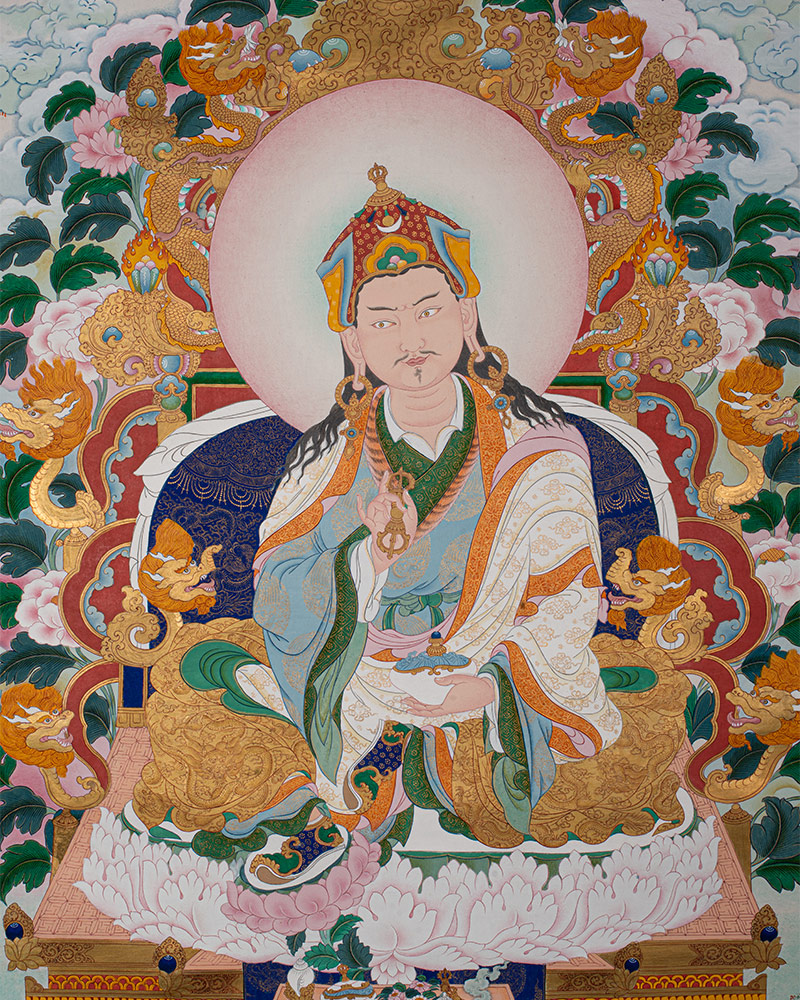
The great Terton Guru Choekyi Wangchuk, renowned and truly deserving of the title “King of all Treasure Revealers” (Terton), was an emanation of the three great Dharma Kings, particularly King Trisong Deutsen. He was also the embodiment of Prince Lhaje, who received the prophecy of manifesting thirteen lifetimes.
He was born in the valley of Layak in Lhodrak, Tibet, in the fortress of Senge Gying. His family lineage traces back to powerful, unbroken lines of tantric practitioners since the time of King Trisong. His father was the accomplished ngakpa (tantric practitioner) Pangton Drubpai Nyingpo Lhaje Tonpa Nyi O, and his mother was Karsa Gonkyi. He was born on the morning at the time of sunrise, on the 15th day of the first spring month in the Monkey Year (1212 CE), accompanied by many miraculous signs. At the time of his birth, his father was writing the Manjushri-nama-samgiti (Chanting the Names of Manjushri) in gold, and the phrase he was writing when the child was born was: “Choekyi Wangchuk, King of Dharma.” Thus, he was named Choekyi Wangchuk (Powerful Lord of Dharma) as an auspicious connection. Many great masters, including Drigung Kyobpa Jigten Sumgon (1143–1217), Zhang Rinpoche, and Kadampa Geshes, had previously given his father prophecies regarding the birth of this exceptional son.
Spiritual Mentors
At the age of four, he began learning to read and write. He studied countless texts, mastering all fields of knowledge, including the great Bon scriptures and the Great Sutra texts. He studied under many lamas of both the new (Sarma) and old (Nyingma) schools, primarily his father, Ngadak Dro-gon, and the Tsurtön and his disciple. From them, he received countless instructions, including the empowerments, liberations, and transmissions of the Sutras and the new and old Secret Mantras (Tantras), the Oral Teachings (Kama), the Treasure Teachings (Terma), the Pacification of Suffering (Shi-je), Chöd, the Six Yogas, Mahamudra (Chagchen), and Dzogchen.
- At the age of 10, he received and practiced the Six Systems of Vajrapani (Chakdor) of the new school, which caused the water in his ritual vase to boil.
- At the age of 11, He completed all the empowerments, tantras, and pith instructions of the Illusory Net (Gyutrul Drava).
- At the age of 12, He received the teachings on the Kakani Dranga and the Sadhanas of a Hundred Deities, and performed the hundred-syllable mantra practice.
- At the age of 13, In a vision, Jetsun Drolma (Tara) led him to the summit of a crystal fortress where he met Vajrasattva. A four-faced Dakini was present; she showed him each of her four faces and gave him prophecies about spreading the teachings and subduing those difficult to tame.
- At the age of 14, From Tise Drogyang Sarpa, he received the teaching of major treatises such as Valid Cognition (Tsema), Abhidharma Samuccaya (Compendium of Higher Knowledge), Bodhicharyavatara (Guide to the Bodhisattva’s Way of Life), Hevajra Tantra (Gye-dor), and the teachings on Mahamudra/Dzogchen, Shije, and the Six Yogas. From Thakhorwa, he received the Madhyamaka den-chung (Small Truth of the Middle Way). From Tsurtön (father and son), he received the Ati (Dzogchen) teachings. From his own father, he received the complete teachings on Shije, Vajrapani, Chöd, introductory instructions, and wrathful Dharma protectors’ mantras.
- At the age of 17, He received all the ripening empowerments and liberating instructions of Nyang Rinpoche(1124-1192) from Ngadak Drogon Namkha Pal, which is why he was also called the Incarnation of Nyang’s Speech. Ngadak Drogon was the youngest son and a lineage-holding student of Nyang Rinpoche.
- At the age of 18, while receiving the Bodhicitta vow and Dharma teachings from Sakya Pandita (1182–1251), he dreamt that he met Manjushri on China’s Five-Peaked Mountain (Wutai Shan), who imparted special pith instructions, giving him the conviction that he had attained all the Dharma.
Discoverery Treasures (Terma)
According to His Holiness the 17th Gyalwang Karmapa, Ogyen Trinley Dorje, while most Tertons reveal Terma (treasure teachings) that fall within the scope of the Nyingma (Ancient) School, Guru Choekyi Wangchuk was different: he revealed not only old Nyingma teachings but also new teaching from the Latter schools(Ter Sar). For example, he revealed a treatise hidden in Lhodrak called Se-kar Ma, which related to the Six Dharmas of Naropa, said to have been written by Marpa, the translator with his own blood from his finger.
Another distinctive feature was that Guru Choekyi Wangchuk performed his treasure revelations as Crowd Terma (Throm Ter), meaning he revealed them in front of assembled masses. This made his teachings indisputable and cemented his title as the Great Terton.
Later, he eventually received a treasure guide (list (karchak), or parchment scroll, of mind treasures to be discovered). (Kha Jang) that had been passed down from the Terton Draba Ngonshe. This guide clearly indicated the location and nature of various hidden treasures. Previously, others had attempted to reveal the treasures according to this guide, but were met with great obstacles and failed. The guide(list) could not be destroyed either. Although Choekyi Wangchuk came into possession of this Kha Jang at age thirteen, his father did not grant permission for him to use it.
In 1233 CE, at the age of twenty-two, he stole the Kha Jang and traveled with a realized practitioner of Chöd. Following the guide, he acquired a supplementary guide (Yang Jang) from Namkae-chen valley in Layak Nyin. Using the treasure key, the essence of the treasure (Ter Chud), and the treasure guide, he opened the sites and revealed eighteen great Physical Treasures, along with one Mind Treasure (Thuk Ter), making a total of nineteen great treasures.
Lineage and Disciples
The Great Terton Choekyi Wangchuk took the Dakini Pema Drolma as his consort. Their children included their son Pema Wangchen and daughter Sangye Kundrol, as well as Guru Choekyi Norbu, and others. The Terton Gyatsa Namthar (Biographies of the Hundred Tertons) by Kongtrul states: “There appeared eight exceptional sons without interruption, including Pema Wangchen, an emanation of Langdro, and Nyal Nyima Ozer.”
His principal disciples included Menlungpa Mikyö Dorje, the Nine Worthy Sons (Nöd dhen Bu Gu), the Lhodrak master Lopon Ema, and the Nepalese master Bharo Tsugzin.
Ultimately, at the age of fifty-nine, he passed away, displaying unimaginable miraculous signs and feats in the Water Bird year of the Fifth Rabjung cycle (1273 CE).
The Origin of the Tenth Day Cham Dance
The Tsechu Lama Dance is believed to have been introduced by Guru Chöwang through his pure vision. Today, many Nyingma and Kagyu monasteries perform the Tsechu Puja annually, including Tsum Monastery. According to the Vajra Master late Kyabje Tenga Rinpoche, the Great Terton Guru Choekyi Wangchuk established Nedong-tse as his main seat and revealed the Sangdue Leu Gye Ma (Eight-Chapter Secret Gathering) treasure.During the full moon (the fifteenth day), Guru Rinpoche performed the Tenth Day Cham Dance (ritual dance) in the pure land of the Copper-Colored Mountain (Zangdok Palri). Guru Choekyi Wangchuk miraculously traveled to Zangdok Palri, witnessed the entire Cham Dance, and upon his return to Nedong-tse, he perfectly taught all the ritual movements, thus establishing this tradition.
The Great Terton’s Connection with Tsum Valley
It is known from the Great Terton Choekyi Wangchuk’s own words that there was a time when he performed his work for the benefit of beings by traveling in a hidden, indeterminate manner. As stated in the Melody of the Householder’s Dream (302):
The locals view me as afflicted by anxiety (a madman).
“Now I wander aimlessly throughout the world,
Sometimes I hide in solitude, wherever I feel comfortable,
And those entangled in samsara see me as a tattered beggar.”
In the latter part of his life, he visited the region of Tsum Valley and worked for the sake of the teachings and sentient beings for a long period. He established the Ngak Labrang (Tantric Hermitage), which remains intact today. While residing there, he left clear footprints in solid stone, a sign of his accomplishment as an accomplished master (Siddha), which can still be seen.
Inside the Ngak Labrang, important sacred objects are preserved: the Great Terton’s Hat that can liberate by seeing (Thungdrol Rinpoche), the Self-Speaking Hayagriva Dagger (Tamdrin Phurpa Sung-jön Ma), and various sacred writings, including the Tsasum Drildrub (Integrated Practice of the Three Roots), the Kagyé Kang-Shak (Fulfillment and Confession of the Eight Commandment Deities), and the Lagug Choga (Rite for Summoning the Life-Force), some of which he composed in Tsedrak Ösal Ling. Furthermore, various blessed handwritten texts by the Great Terton are kept in the Ngak Labrang as a sacred source of merit for beings.
The Ngak Labrang and its mother monastery, Dondrub Ling, are considered among Guru Choekyi Wangchuk’s primary seats. During his residence in Tsum, he established one temple in each of the thirteen Tsum villages and installed one statue representing the Three Kāyas (Dharmakāya, Sambhogakāya, and Nirmāṇakāya) in each, thus extending vast kindness to bring the beings of the thirteen communities in Upper, Middle, and Lower Tsum to maturation and liberation. It is certainly due to his inconceivable aspiration and the uninterrupted grace of his lineage that the locals still perform the unbroken Tenth Day ritual (Tsesh-chu) every month and various other Dharma practices of the Great Terton.
Additionally, a student of Dilgo Khyentse Rinpoche mentioned that the Nepalese master Bha Ro Tsugzin was a Dzogchen master and that he received instruction from Choekyi Wangchuk during the latter’s stay in Nepal. This confirms that Choekyi Wangchuk did indeed travel to Nepal.
2. Principal Son, Pema Wangchen
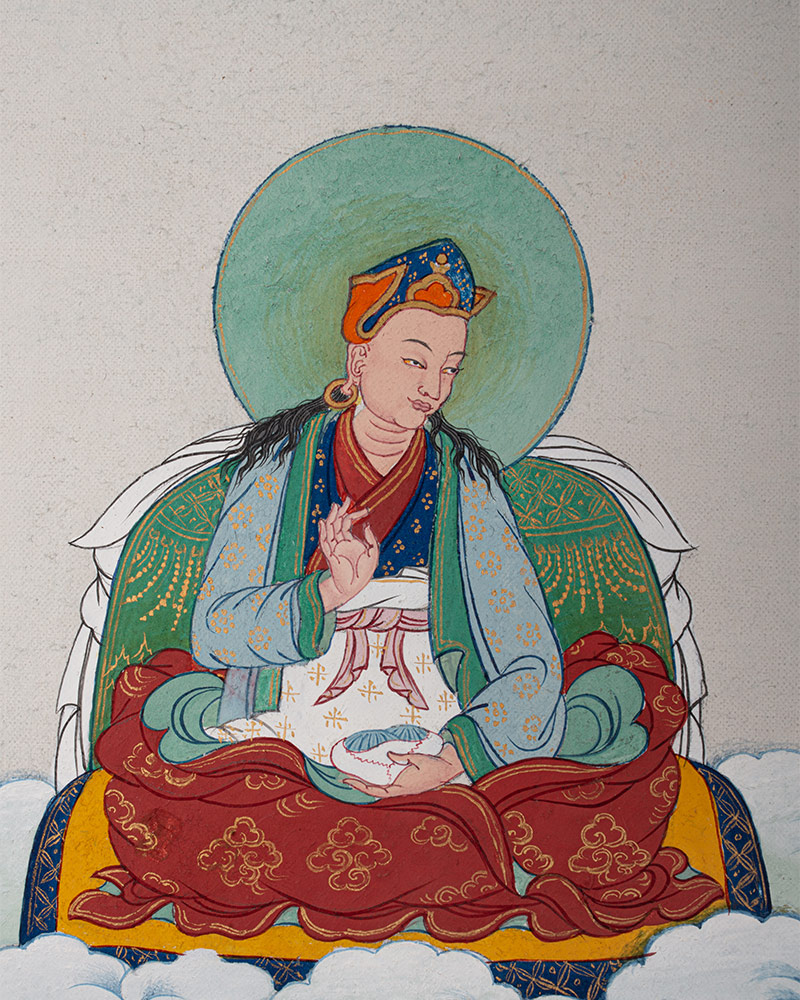
The son, Pema Wangchen, was the eldest son of the Great Terton Guru Choekyi Wangchuk and the Dakini Pema Drolma. He is described in the Terton gya Tsa Namthar (Biographies of the Hundred Tertons) as an emanation of Hayagriva and a reincarnation of Langdro Könchok Jungné.
His younger siblings included Nyang-ral Nyima Ö, Guru Choekyi Dorje, Guru Choekyi Norbu, and his sister, Sangye Kundrol. Like his father, he was a great scholar and Siddha, and he was one of the seven heart-sons who inherited his father’s lineage.
Once, Guru Choekyi Wangchuk was asked about these seven close disciples: “Will they attain Buddhahood? If not, how many lives will they take, and what will their enlightened activities be?” Choekyi Wangchuk replied that when he met Guru Padmasambhava when he was at Nengön Monastery, Padmasambhava had said: “In the future, Pema Wangchen will possess inexhaustible profound treasures.” When asked for more detailed reasoning, Choekyi Wangchuk responded with a spontaneous song (Doha) of prophecy:
“This principal son, Pema Wangchen,
Having realized the meaning of ‘one knowing liberates all,’
Has essentially attained Buddhahood in this very life.
Yet, due to aspirational prayers, he may take three, six, or perhaps nine births.
Approximately twenty-five years from now,
He will guide disciples in the Tsang region.”
This prophecy and praise indicate that the principal son, Pema Wangchen, performed great enlightened activities, and he himself is also a treasure revealer. Pema Wangchen was the second seat holder of Ngak Labrang.
3. Ngakchang Sangngak Dorje
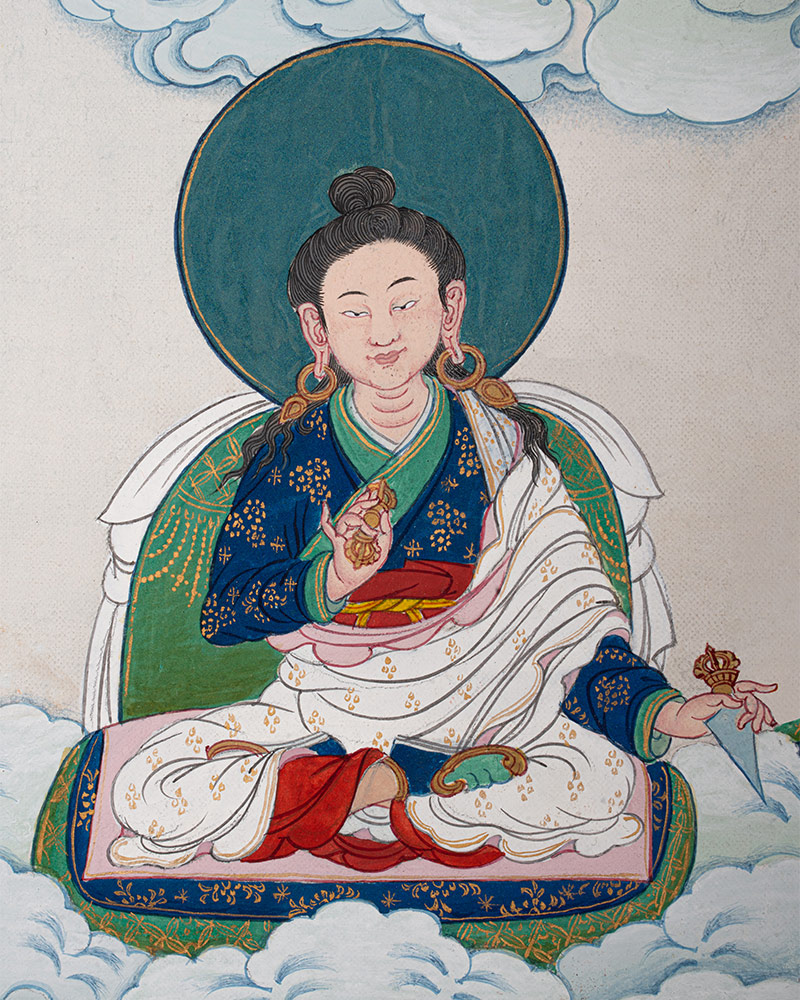
Dungse Sangngak Dorje was the son of Pema Wangchen and grandson of Great treasure revealer Chokyi Wangchuk. His name is clearly mentioned not only in the ritual texts (Chö chod) of the Ngak Labrang but also in ancient manuscripts. One verse states:
“To Ngakchang Sangngak Dorje, who resides in the palace of the Dharmadhātu, we pray.”
Furthermore, in the lineage supplication of the Kagyé Fulfillment Offering (Kagyé Kang Sol), it is said:
“He who shows the path even at the final eon’s end,
Fulfill the sacred commitment of Ngakchang Sangngak Dorje!”
Thus, Ngakchang Sangngak Dorje was a greatly accomplished sage, and he is the third seat holder of Ngak Labrang.
4. Guru Gaga Vajra
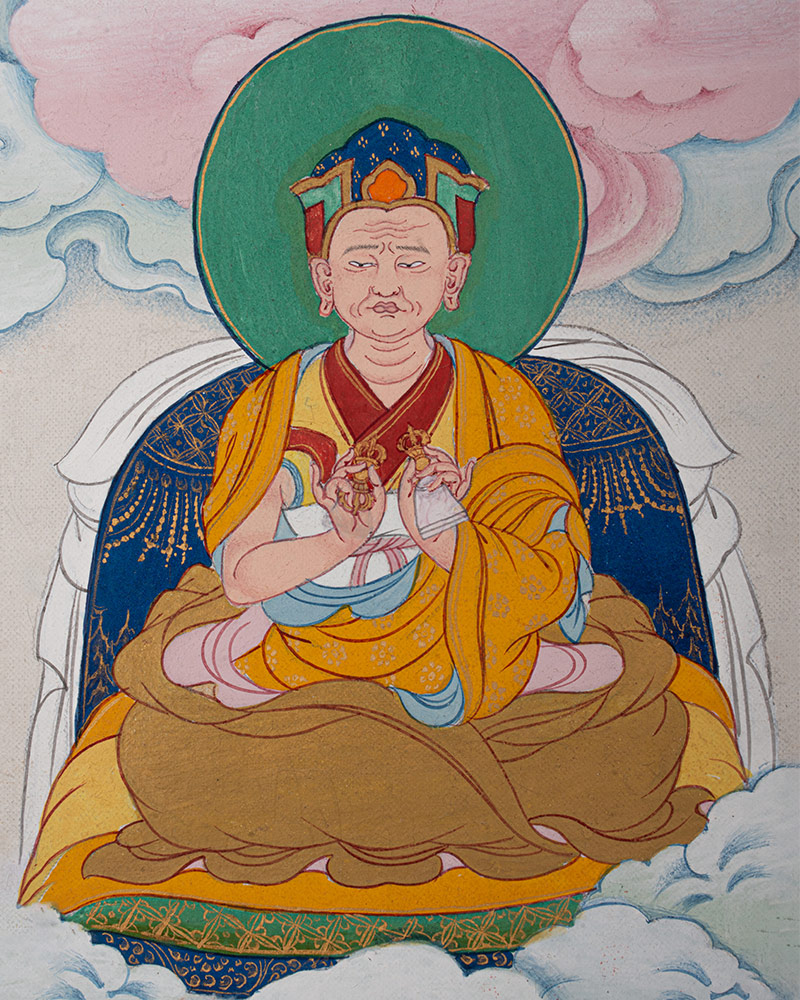
Guru Gaga Vajra was the son of Lama Sangngak Dorje. It is certain that, following in the footsteps of his ancestors from a young age, he became a great scholar and accomplished Siddha.
In the ritual texts of the Ngak Labrang, he is included in the line of seat holders with the supplication: “We pray to Guru Gaga Vajra.” Similarly, in the Kagyé Fulfillment Offering (Kagyé Kang Sol), it states:
“He who showers the rain of Dharma upon beings in degenerate times,
Fulfill the sacred commitment of Guru Gaga Vajra!”
Thus, Guru Gaga Vajra was the fourth seat holder of Ngak Labrang.
5. Khyenrab Dorje
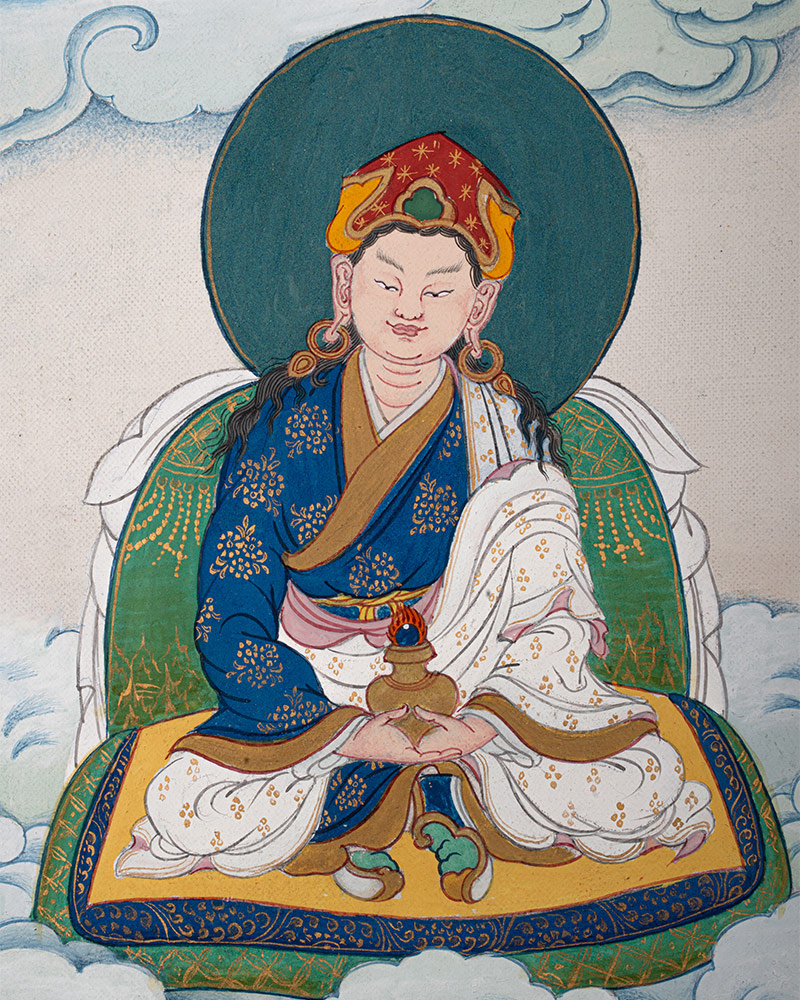
Khyenrab Dorje was the son of the fourth seat holder of Ngak Labrang, Guru Gaga Vajra. His name is found in the lineage supplications of the seat holder’s ritual texts, and in ancient manuscripts, it is mentioned:
“Tsiphuk Sangngak Chö [Ling],
Nyamme Khyenrab Dorje.”
This indicates that Nyamme Khyenrab Dorje founded the monastery of Tsiphuk Sangngak Chö Ling. This monastery served as a principal seat until the time of the thirteenth seat holder of Ngak Labrang, and historically, deep studies in both Astrology (Tsi Kar Nag) were conducted there. After the split occurred in Ngak Labrang and the establishment of a new Labrang known as Khangsar Labrang, it is now the main mother monastery of Khangsar Labrang.
Furthermore, the Kagyé Fulfillment Offering states:
“He who liberates minds with the instructions of both ripening and liberation,
Fulfill the sacred commitment of Nyamme Khyenrab Dorje!”
Thus, Khyenrab Dorje was a great scholar with a high realization of Dharma. He is the fifth seat holder of Ngak Labrang.
6. Norbu Tenpa
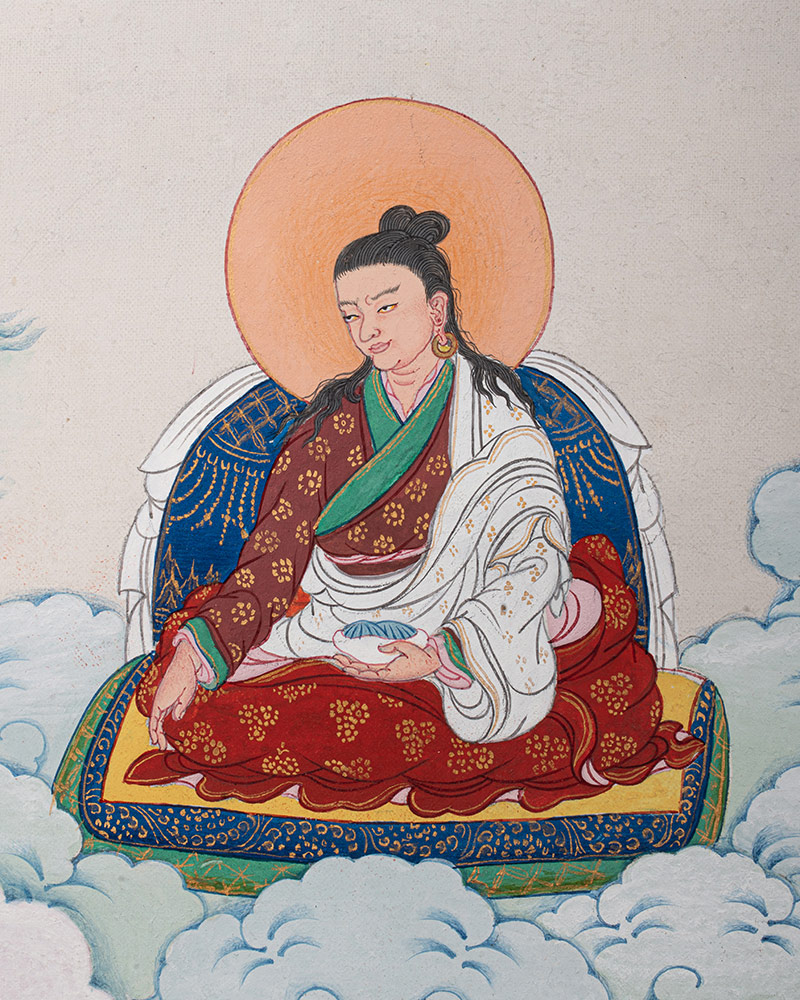
Dungse Norbu Tenpa was the son of Lama Khyenrab Dorje. From a young age, he excellently maintained and developed all the traditions of his ancestors, particularly the treasure Dharma of Guru Choekyi Wangchuk.
Lama Norbu Tenpa is included in the lineage supplications of the Ngak Labrang ritual texts, and in the Kagyé lineage, it is said:
“He whose realization of the Dharmakāya nature appears as whatever arises,
Fulfill the sacred commitment of the unequalled Norbu Tenpa!”
Lama Norbu Tenpa is a great Siddha who has realized the Dharmakaya of nature. He is recognized as the sixth seat holder of Ngak Labrang.
7. Ngakchang Yonten Phuntsok
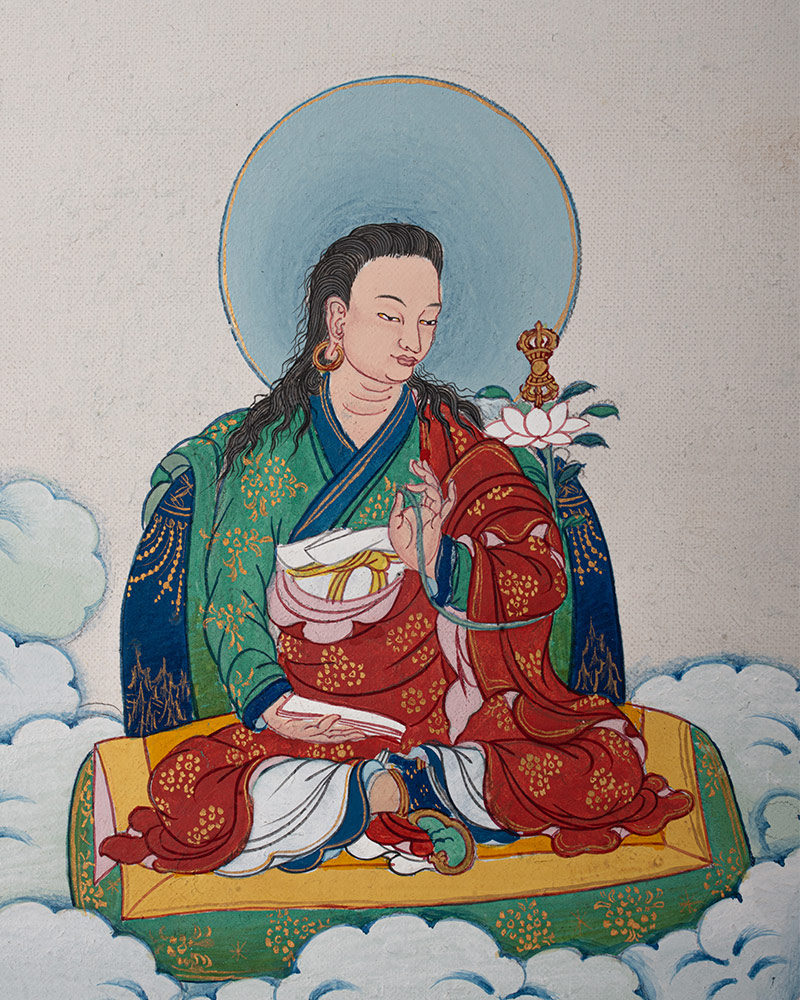
Ngakchang Yonten Phuntsok was the son of the Dungse Norbu Tenpa. In ancient writings, it is stated:
“The vast work for beings, without limit [unreadable],
Tsedrak Öd [Ösal Ling],
Ngakchang Yonten Phuntsok.”
Tsedrak Ösal Ling is an important monastery of Ngak Labrang, located on a cliff near Tsum Leru. The name tse means upper, and Drak means hill; thus the name itself indicates the location. It is a sacred place of Meditation for many great scholars and Sidda. It is built by Lama Yonten Phuntsok.
Furthermore, the Kagyé Fulfillment Offering states:
“He who guides all beings through the path of generation and completion stages,
Fulfill the sacred commitment of Ngakchang Yonten Phuntsok!”
Lama Yonten Phuntsok himself is a great meditator with high compassion for the beings.
Therefore, Dungse Yonten Phuntsok was the seventh seat holder and lineage holder of Ngak Labrang.
8. Tenzin Norbu
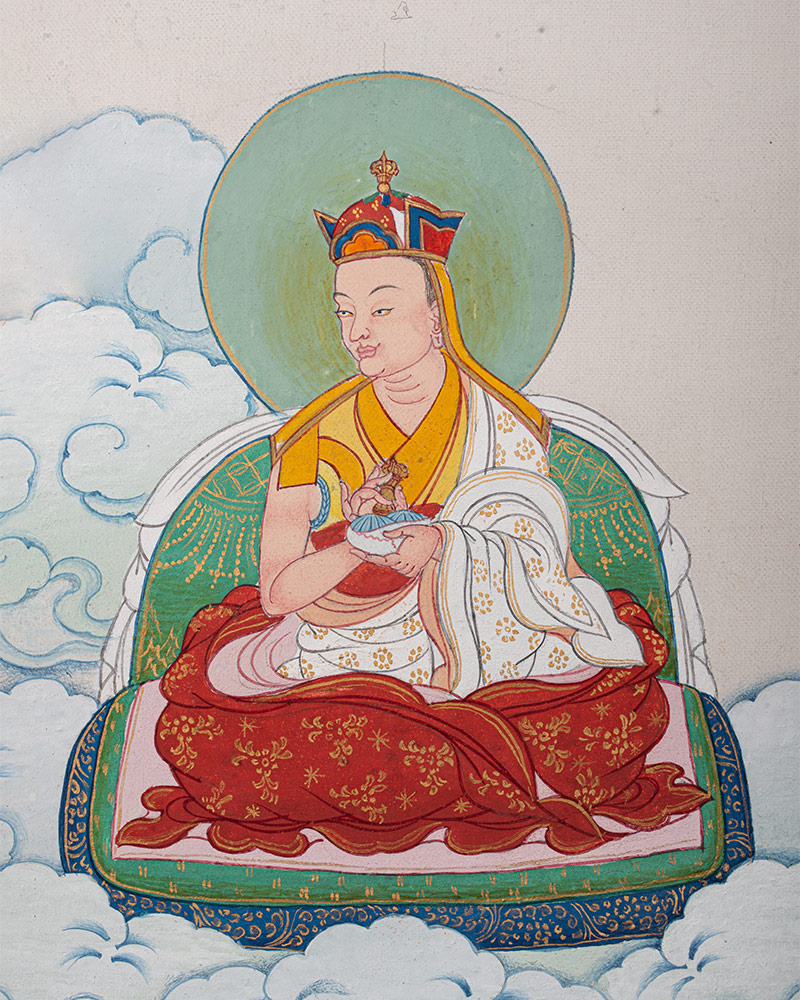
Dungse Tenzin Norbu is known as the son of Ngakchang Yonten Phuntsok. There is no historical record of the Ngak Labrang lineage being broken due to a lack of sons. Ngak Labrang is regarded as an unbroken life blood line of Guru Chokyi Wangchuk.
In ancient writings, it is stated:
“The spontaneously present palace of all desired objects,
Kind-Hearted Tenzin Norbu.”
And in the Kagyé Fulfillment Offering, it is said:
“Skillful in the methods of the Secret Mantra, prophesied by the Victorious Ones,
Fulfill the sacred commitment of Kind-Hearted Tenzin Norbu!”
Lama Tenzin Norbu was a great lineage holder of Guru Chowang and has acquired all the treasure teachings of Guru Chowang and Pass them to his successor. Lama Tenzin Norbu is the eighth seat holder of Ngak Labrang.
9. Ngakchang Düjom Dorje
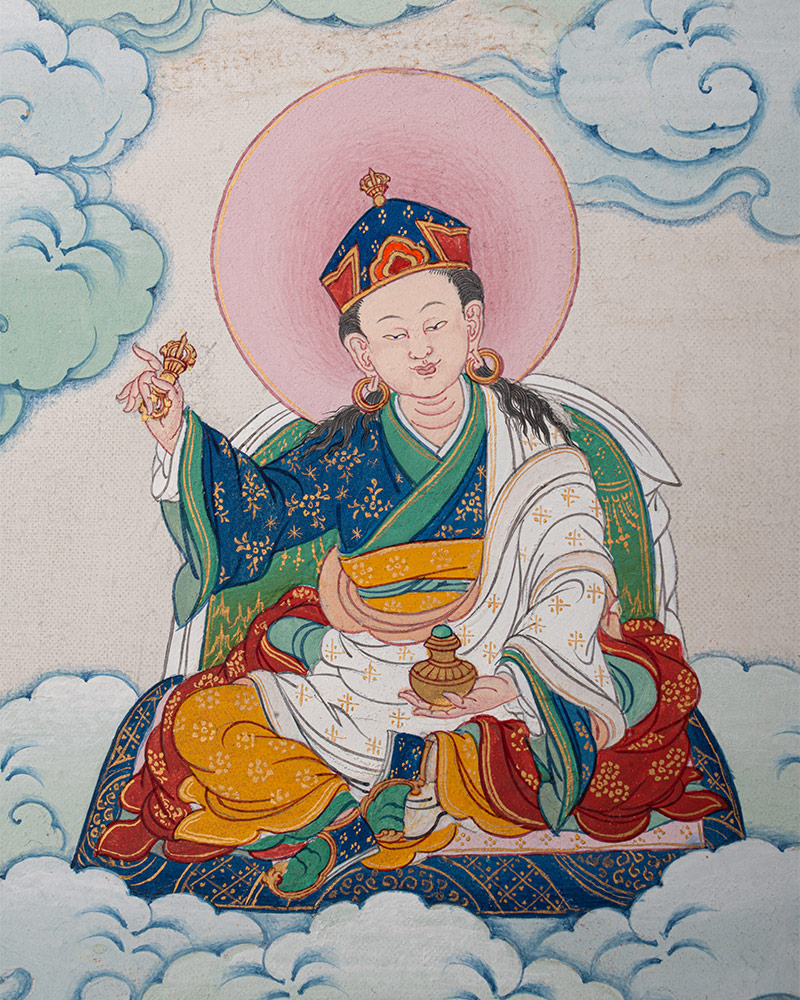
Ngakchang Düjom Dorje was the son of Dungse Tenzin Norbu. He is mentioned in the ancient texts of the Labrang, where it says:
“In the vast expanse holding the Kagyü (Word) and Terma lineages,
Ngakchang Düjom Dorje.”
Similarly, in the lineage supplication found in the ritual texts of Ngak Labrang and the Kagyé Fulfillment Offering, it is stated:
“He who attains accomplishments through the practice of the four empowerments,
Fulfill the sacred commitment of Ngakchang Düjom Dorje!”
Thus, Ngakchang Düjom Dorje was the ninth seat holder of Ngak Labrang.
10. Rigdzin Tobden
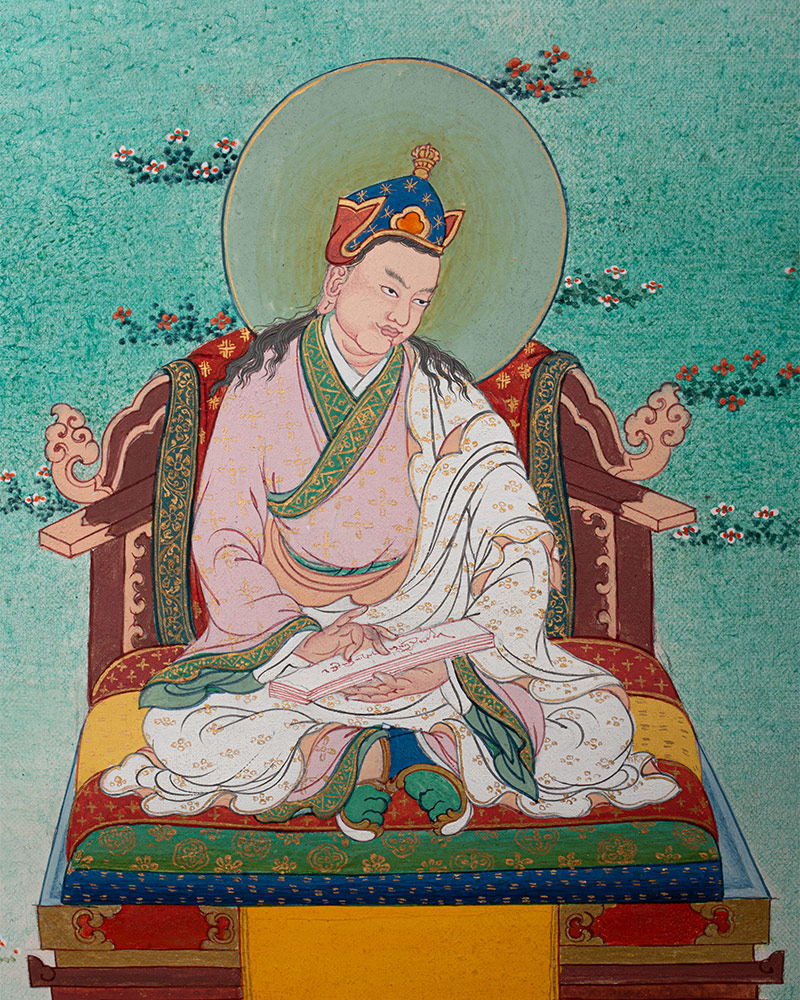
Nyamme Rigdzin Tobden was the father of Zilnön Dorje, the eleventh seat holder. Although he is not clearly mentioned in the ritual texts or ancient writings of Ngak Labrang, a supporting document issued by the Tibetan government during the time of Ngak Lama Zilnön Dorje refers to him as “Zilnön Wanggyal Dorje, son of Rigdzin Tobden.” From this, we know that Rigdzin Tobden was the father of Lama Zilnön Dorje. He was also mentioned as the caretaker of Boudha Stupa. Thus, he was a very influential Lama at that time. In summary, Lama Rigdzin Tobden was the tenth seat holder of Ngak Labrang.
11. Zilnön Dorje
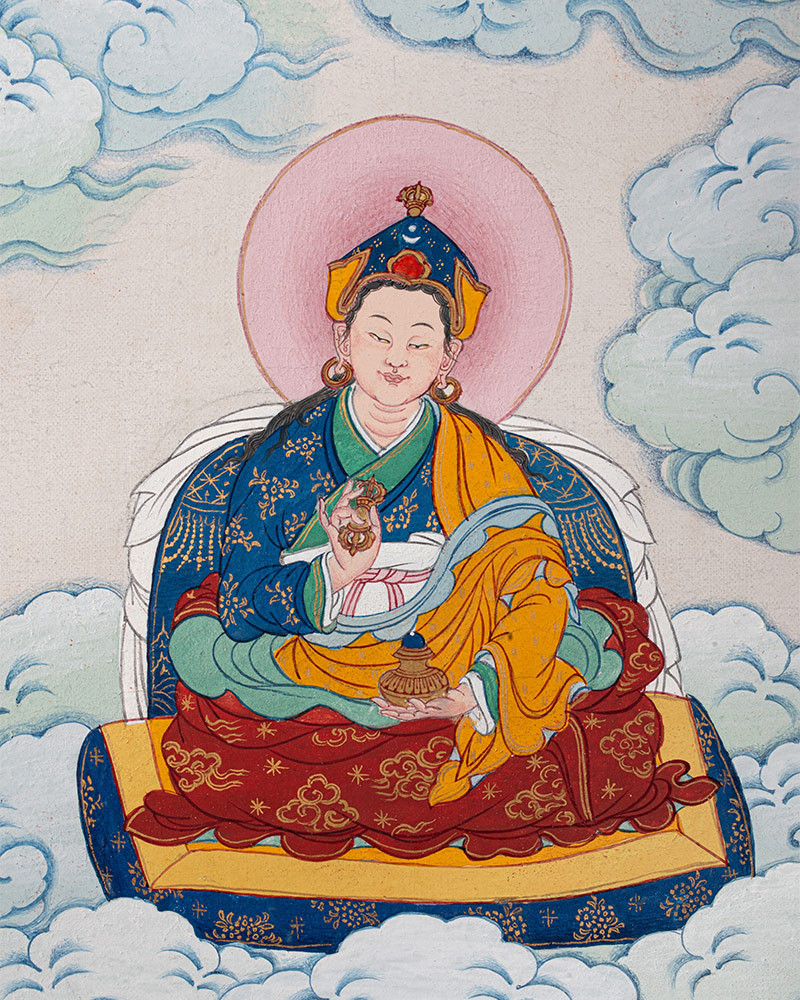
Lama Zilnön Dorje was born into the Pangton lineage as the son of Rigdzin Tobden. He was a seat holder of the Ngak Labrang during the 17th century and is recognized as one of the most famous and active lamas in the lineage.
The Lama’s kindness extended not only to the monastic and lay communities in the Tsum region but also greatly benefited the teachings and beings in Kyirong, Dzongkha, and Nubri as well.
He is praised in the Kagyé Lineage Supplication, which states:
“He who, as an emanation of Vajrapani, controlled the Nāga Kings,
Fulfill the sacred commitment of Kind-Hearted Zilnön Dorje!”
This Lama received a unique ornament for his crown, a Buktham, from the Gaden Phodrang government, signifying that it was appropriate for him to assume the religious and political leadership in his home region of Tsum and granting him authority over his subjects as a wheel-holder of power.
Furthermore, according to a scroll of covenant (contract) established at Dondrub Ling Monastery in the fifth month of the Iron Bird Year, it is recorded that he was also granted a great Copper Plaque Edict known as Tama Patra (Zangs Yig Chenpo) from the Shri Shri Gorkha King (of Nepal).
The supporting document issued by the Tibetan government (Ganden Phodrang) reveals that Lama Zilnön Dorje’s father, Rigdzin Tobden, was the custodian of the holy site of the Jarung Khashor Stupa (Boudhanath in Nepal). This suggests that there are certainly many more undiscovered details about his extensive activities, which warrant further research.
Lama Zilnön Dorje is also referred to by the name Zilnön Wanggyal Dorje. He was the eleventh seat holder of Ngak Labrang.
12. Rechung Dorje
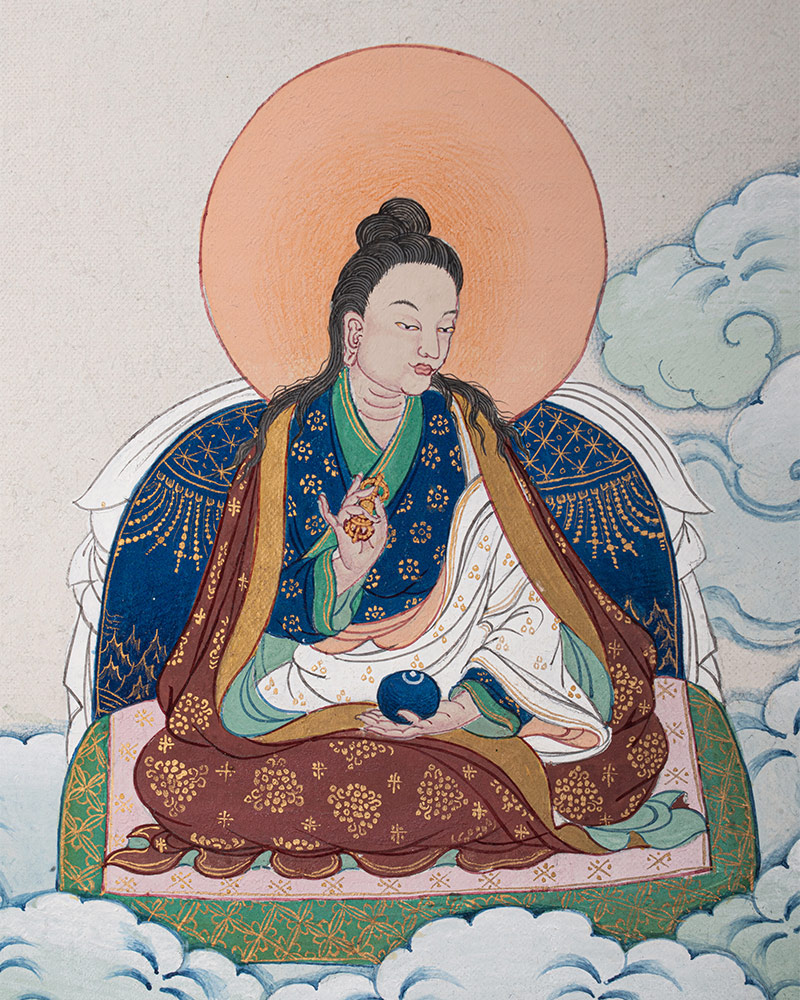
Ngakchang Rechung Dorje was the son of Lama Zilnön Dorje. Lama Rechung Dorje is also supplicated in the Labrang ritual texts and ancient writings, where it states:
“From the pure palace of the Dharmadhātu in the heart,
Fulfill the sacred commitment of Ngakchang Rechung Dorje!”
According to ancient Labrang documents, a split in the Labrang is said to have occurred during the time of Lama Rechung Dorje between his sons, Pema Tenkyong and Jamyang Dorje. Although the authority of the Labrang typically belonged to the eldest son, it seems the father and the younger son agreed to divide the Labrang and its patrons (jin dak).
The two sons stayed together for a long time, extensively performing religious activities. Later, however, the younger son, Jamyang Dorje, separated and established another Labrang called Khangsar Labrang.
One scroll states: “The relics of body, speech, and mind of Dondrub Gön were taken to Tsiphuk.” This confirms that Dondrub Ling was effectively the mother monastery of Ngak Labrang, while Tsiphuk Monastery became the mother monastery of Khangsar Labrang.
During this period, the support given by the father, Rechung Dorje, to his younger son Jamyang Dorje led to some deterioration of the old system. This caused severe conflict between the two brothers, necessitating petitions to local officials for arbitration. Many scrolls containing judicial decisions and edicts concerning this matter are still preserved today.
Oral tradition recounts that during a dispute over a sacred object, the two brothers fought over a Hayagriva mask, pulling at it until it broke into pieces. Many ancient scrolls document extensive details about who was entitled to various fields and properties. Eventually, vows and oaths were taken to settle the matter. In any case, there appears to have been significant conflict within the Labrang between the father and sons.
Lama Rechung Dorje was the twelfth seat holder of Ngak Labrang.
13. Pema Tenkyong
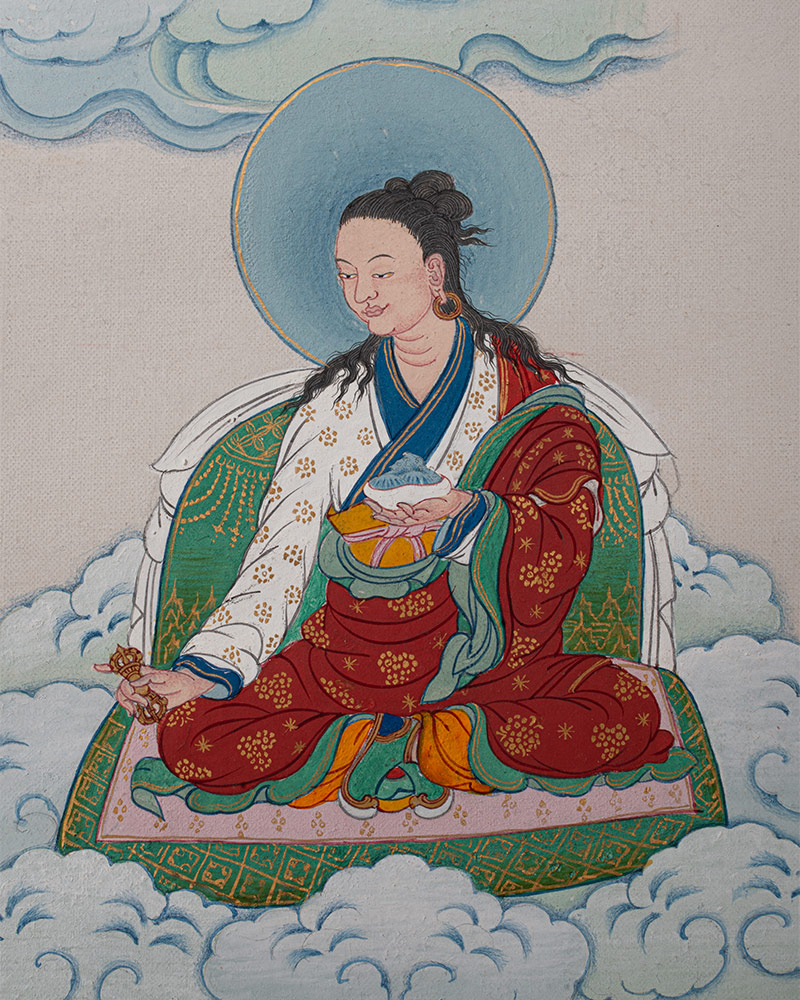
Dungse Pema Tenkyong was the eldest son of Lama Rechung Dorje. He learned reading, writing, and all the ritual practices, both common and uncommon, of the Labrang directly from his late father.
In the ancient records of the Labrang, it is stated:
“The self-appearing Dharmakāya…
Nyame Pema Tenkyong.”
And the Kagyé Lineage Supplication says:
“From the great, self-appearing Dharmakāya palace,
Fulfill the sacred commitment of Nyamme Pema Tenkyong!”
It was during his time that the Ngak Labrang split, and his younger brother received half of the patrons and monasteries, which became known as Khangsar Labrang. He was the last seat holder of the unified Ngak Labrang and the first seat holder of the current Ngak Labrang. Although, as the eldest son, the Labrang authority should have belonged to him, the split occurred because his younger brother had the support of their father. Lama Pema Tenkyong was the thirteenth seat holder of Ngak Labrang.
14. Jamyang Dorje
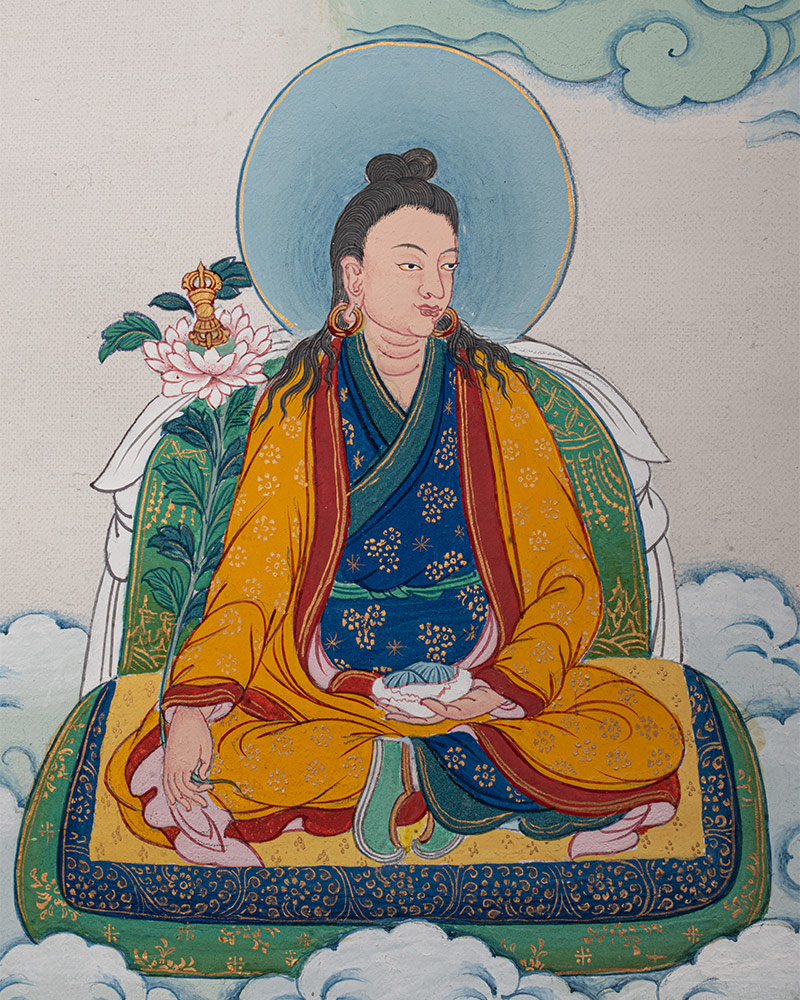
Ngakchang Jamyang Dorje appears to have been the younger son of the lineage son Rechung Dorje. It was during his time that the split with his elder brother, Pema Tenkyong, occurred, and he established a separate Labrang called Khangsar Labrang.
However, because he initially lived with his elder brother and shared the same consort for a time, he is thought to be included in the Ngak Labrang lineage.
In the ancient text depicting the lineage, it states:
“On the seat of the all-pervading sun and moon lotus,
Ngakchang Jampal Dorje.”
This is thought to be the same person referred to in the ritual texts and Kagyé Lineage Supplication, which says:
“On the seat of the all-pervading sun and moon lotus,
Fulfill the sacred commitment of Ngakchang Jamyang Dorje!”
Furthermore, although Lama Jamyang Dorje established a separate Labrang, he had no son. He adopted a son who was a descendant of Shri Ngadak from the Nubri Roe Labrang as a son-in-law (magpa). Therefore, the family lineage became different, but the religious tradition remains the same as that of Ngak Labrang.
In any case, Lama Jamyang Dorje was the fourteenth seat holder of Ngak Labrang.
15. Chökyong Tenpa
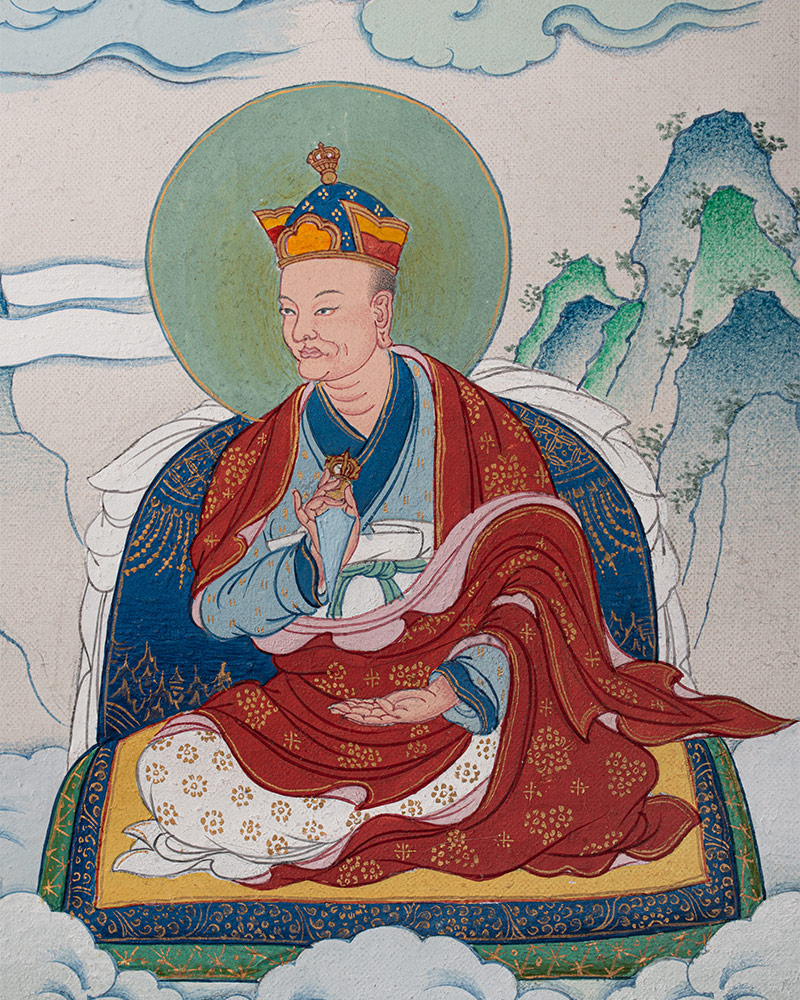
Chökyong Tenpa was the son of Dungse Pema Tenkyong. His name is mentioned in the Ngak Labrang ritual texts, and in the Kagyé Fulfillment Offering, it states:
“From the supremely holy site of Ogyen Ling,
Fulfill the sacred commitment of Kind-Hearted Chökyong Tenpa!”
Lama Chokyong Tenpa was a greatly accomplished Buddhist master with proper knowledge of Labrang Tradition.
Thus, this venerable person was the fifteenth seat holder of Ngak Labrang.
16. Pema Tulku
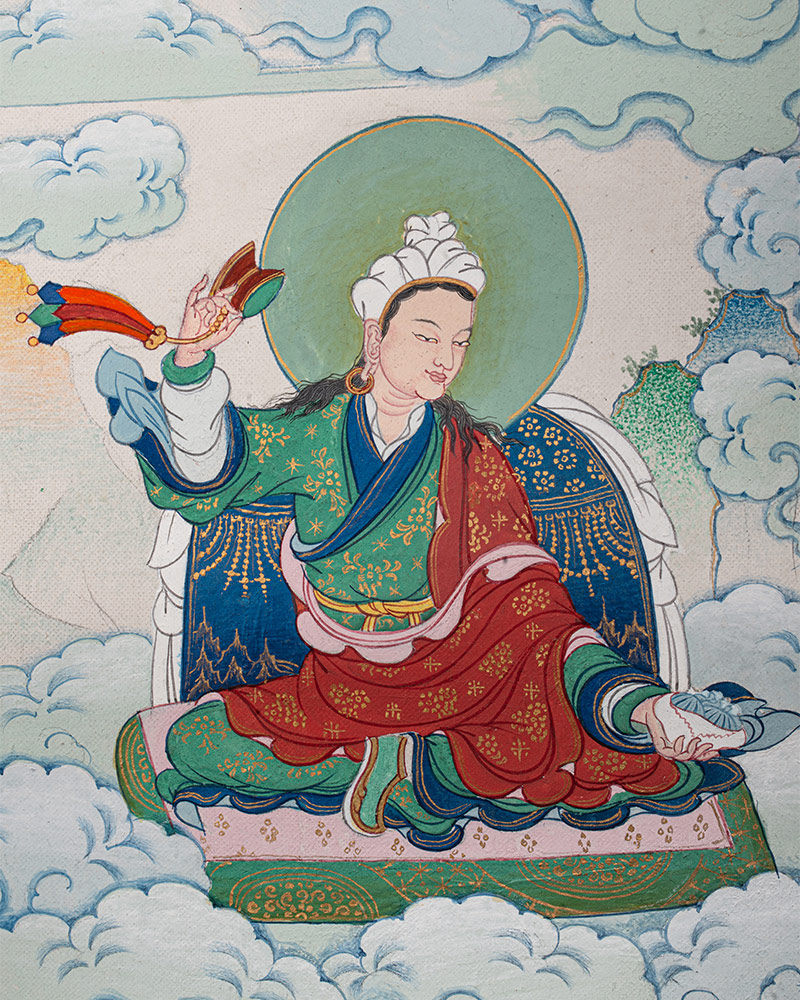
Dungse Pema Tulku was the son of Lama Chökyong Tenpa. Nyamme Pema Tulku is also listed in the lineage succession within the Ngak Labrang ritual texts. Furthermore, the Kagyé Fulfillment Offering includes the supplication:
“On the seat of the lotus, sun, and moon atop the crown,
Fulfill the sacred commitment of Kind-Hearted Pema Tulku!”
Lama Pema Tulku was the sixteenth seat holder of Ngak Labrang.
17. Ogyen Nyima
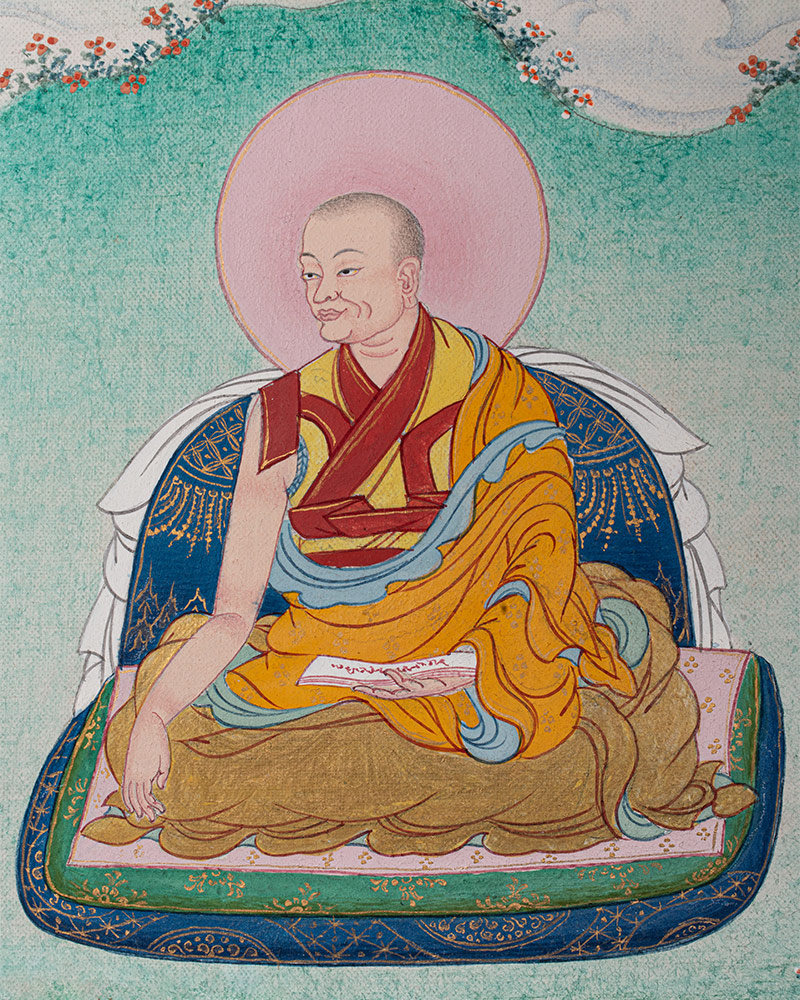
Dungse Ngakchang Ogyen Nyima was the son of Lama Pema Tulku. He learn basic reading and writing from his father, Lama Pema Tulku. He also acquired all the traditional practices of Ngak Labrang and the treasure teachings of his forefather, Guru Chokyi Wangchuk.
He is also listed in the lineage succession within the Ngak Labrang ritual texts.
The supplication in the Kagyé Fulfillment Offering also clearly states:
“From the pure palace of the Dharmadhātu of Great Bliss,
Fulfill the sacred commitment of Kind-Hearted Ogyen Nyima!”
Dungse Orgen Nyima was a great Scholar and Practitioner. He is the seventeenth seat holder of Ngak Labrang.
18. Pema Zilnön
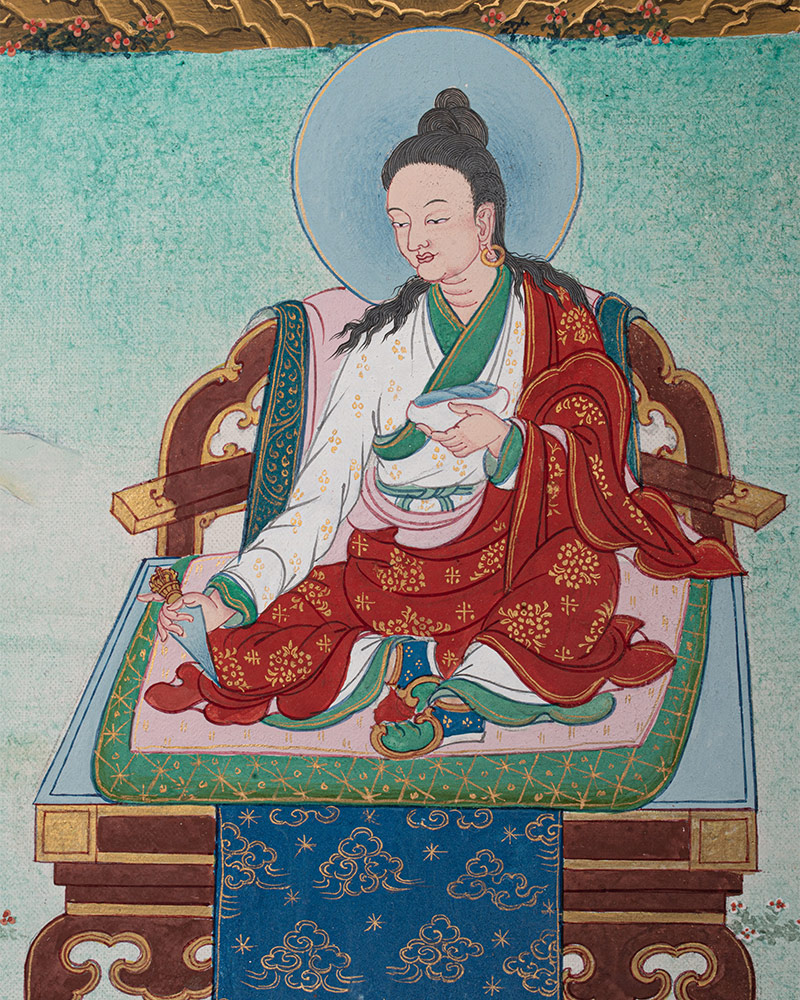
Pema Zilnön was the son of Lama Ogyen Nyima. He was very bright and excellent child who learn all the teachings of Labrang mainly from his Father Lama Ogyen Nyima. He is also listed in the lineage succession within the Ngak Labrang ritual texts.
In the supplication of the Kagyé Fulfillment Offering, it is stated:
“From the palace where whatever arises manifests as the Dharmakāya,
Fulfill the sacred commitment of Kind-Hearted Pema Zilnön!”
He has served general Buddhism and the Labrang lineage with great commitment and dedication.
Therefore, Dungse Pema Zilnön is recognized as the eighteenth seat holder of Ngak Labrang.
19. Phurnag Gyaltsen
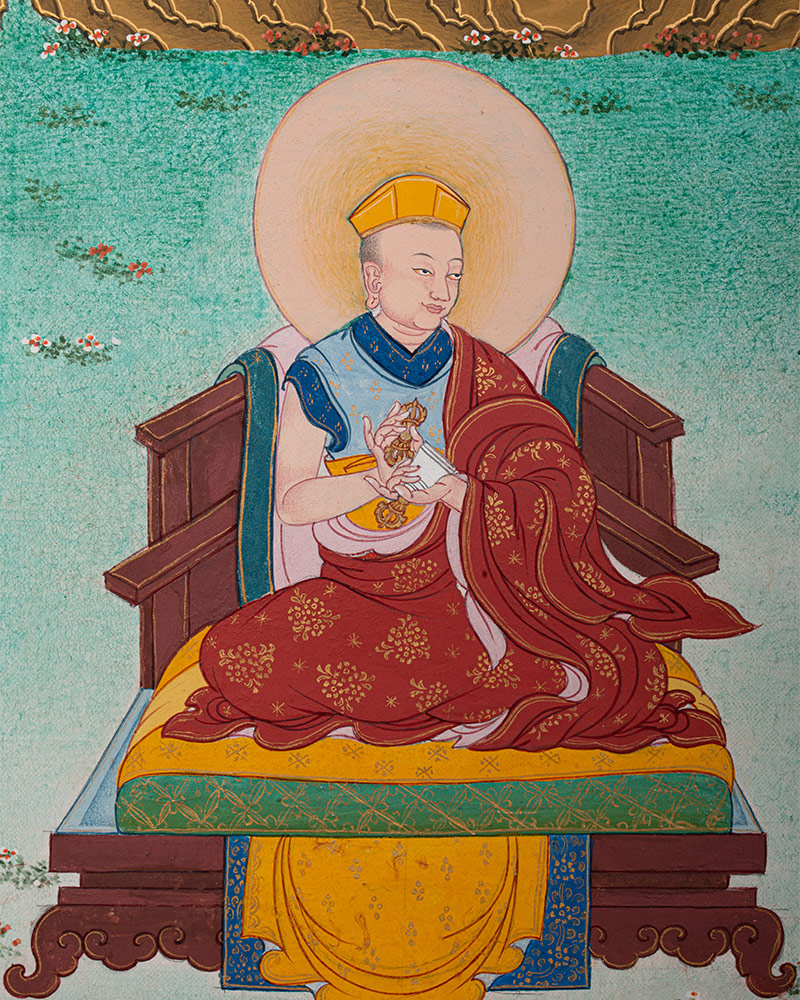
Lama Phurnag Gyaltsen was one of the most popular and influential seat holders of Ngak Labrang. He was the son of Lama Pema Zilnön. From a young age, he thoroughly studied reading, writing, and the unique ritual practices of the Labrang from his late father. He received all the empowerments, scriptural authorizations, and instructions for the Terma teachings of Guru Choekyi Wangchuk.
Lama Phurnag Gyaltsen of Ngak Labrang received an exceptional copper seal (a non-transferable insignia of power) from the powerful Gorkha King within the Nepalese territory in an earlier era, acknowledging his spiritual and political activities and authorizing him to rule over his own domain. These glorious deeds are truly vast: wherever this protector traveled, and especially in the Tsum region where he resided, he performed great acts that caused the Dharma to flourish and beings to find happiness. He was praised by all relevant parties (“supported by the sky”) and became a supreme refuge and unwavering ally for the people.
Furthermore, a decree from the Tibetan government (Ganden Phodrang) granted Lama Phurnag Gyaltsen a formal document confirming his authority over Tsiphuk, Nak Gönpa, and Rephuk Gön monasteries.
Lama Phurnag Gyaltsen was the nineteenth seat holder of Ngak Labrang.
20. Ngakchang Tamdrin
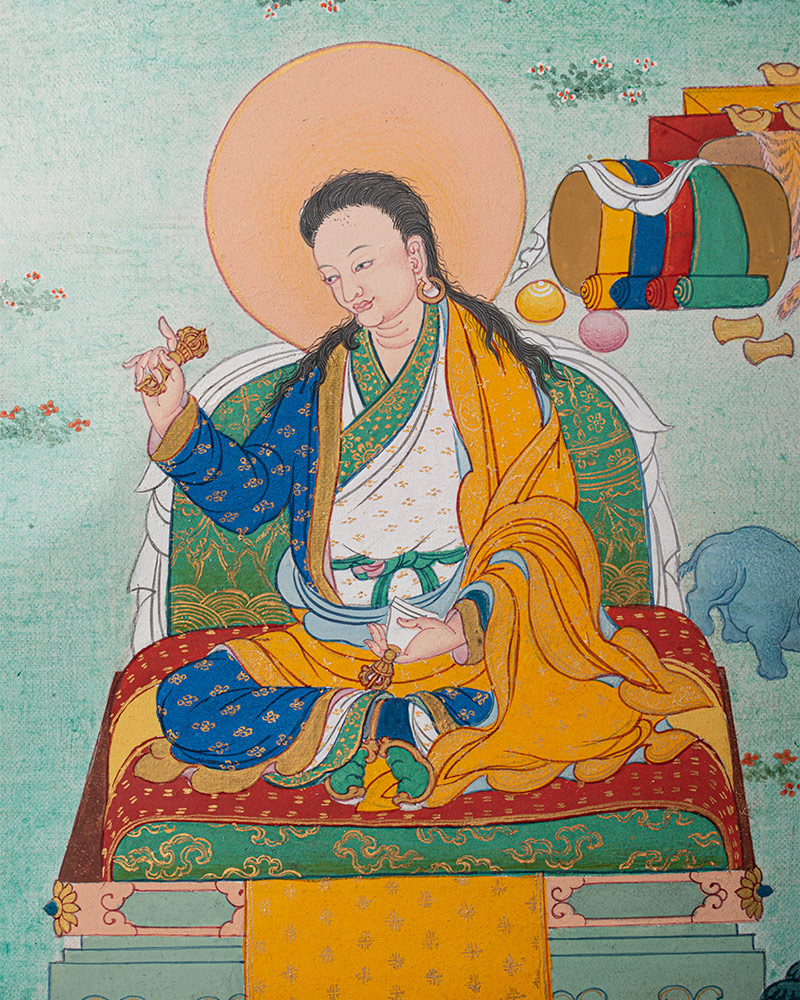
Ngakchang Tamdrin was the son of Lama Phurnag Gyaltsen. He spent much of his time in retreat at his Monastery called Gon Dhundrup Ling, locally called Nak(forest) Gonpa, which means forest Monastery, as its location is in the midst of a vast Forest.
His name is mentioned in the lineage supplications of the Ngak Labrang ritual texts and the Kagyé Fulfillment Offering, which state:
“From the holy and supreme palace of Dondrub Ling,
Fulfill the sacred commitment of Ngakchang Tamdrin!”
Ngakchang Tamdrin had three sons: the twenty-first seat holder of Ngak Labrang, Lama Lhatsen Sönam, as well as Dungse Rigdzin, Dungse Penpa, and Dungse Pema Chöpel. The eldest son, Lhatsen Sönam, took charge of the Labrang and managed, maintained, and propagated the lineage and had four Sons of his own. His second Son, Rigzin, has three sons named Dzong Ogyen, Dodo, and Sonam Phuntsok. His third Son, Pempa, has two sons, Dorje Gyaltsen and Tsewang Phurpa. His fourth Son, Pema Chöpel, had a son, Sönam Phuntsok, and two daughters, Lhamo and Lhakpa Chözom. Lhamo married into the Phurpe family. The descendants of all these children still reside in Tsum today. Dungse Tsewang Tamdrin was the twentieth seat holder of Ngak Labrang.
21. Lhatsen Sönam
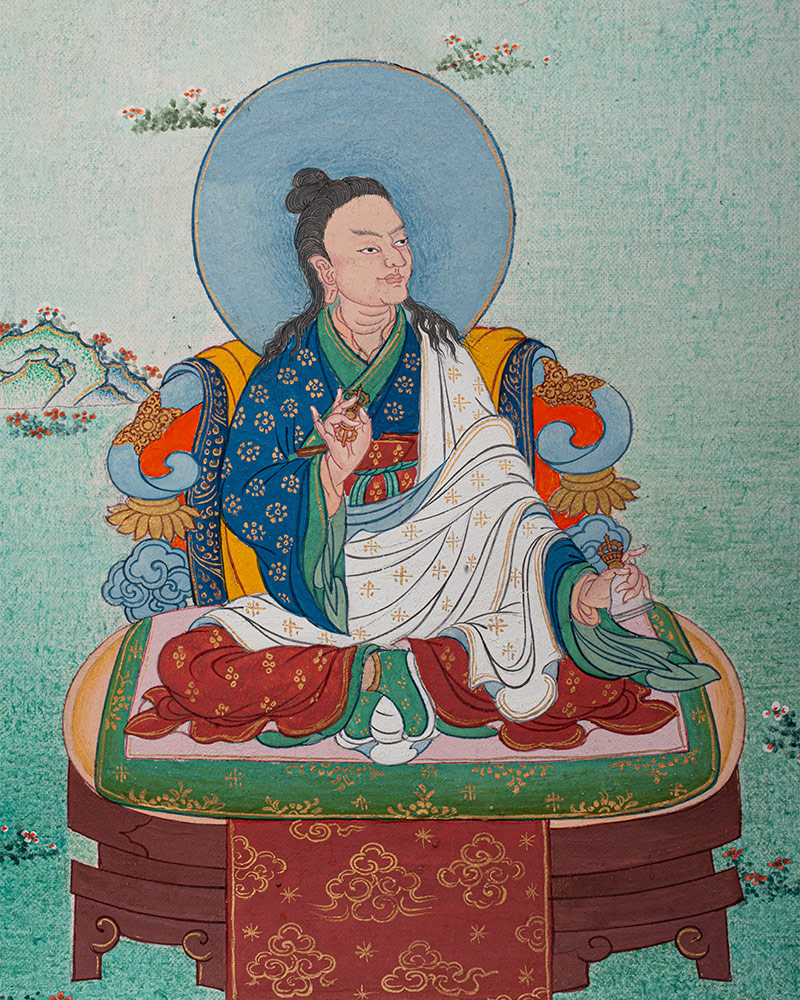
Lama Lhatsen Sönam of Ngak Labrang was the eldest son of Dungse Lama Tamdrin.
Lhatsen Sönam had three Sons named: Dungse Tsewang Tamdrin, Ale, Norbu, and Tamdrin. The eldest son, Tsewang Tamdrin, took over the management of the Labrang, handling the administration, maintenance, and propagation of the lineage. Of the other sons: Second Son, Ale stayed at Tsedrak Ösal Monastery, dedicating his life entirely to spiritual practice (tse dang drubpa nyampar). Third, Norbu left the Labrang and became a householder; his descendants now number more than twenty. Fourth Son, Tamdrin, resided at a branch temple of Ngak Labrang in a place called Yulsar, located between Ngak and Ngakyu villages, where he also dedicated his life entirely to practice.
Lama Lhatsen Sonam took charge of the Labrang and extensively developed the religious activities, engaging in listening, contemplation, and meditation (thos sam gom sum) on all of Guru Choekyi Wangchuk’s Terma teachings and other Sutras and Tantras. He also maintained, rebuilt, and took care of all the Monasteries of Ngak Labrang.
Lama Lhatsen Sönam is the twenty-first seat holder of Ngak Labrang.
22. Tsewang Tamdrin
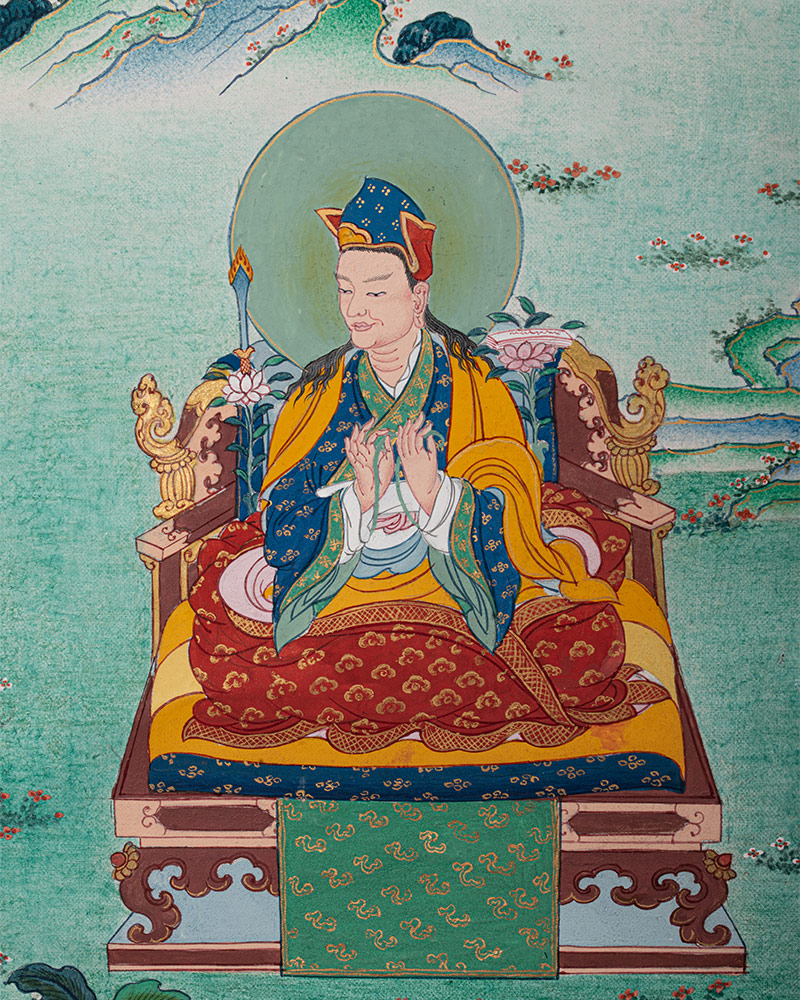
Dungse Tsewang Tamdrin was the eldest of the three sons of Lama Lhatsen Sönam. From a young age, he regularly engaged in studies such as writing and calculation, as well as the traditional practices (nyams zhes) of the Labrang.
When he reached adulthood, he took the eldest daughter of Thinley as his consort (Sang Yum). Her family lived in the area called Naa Thang, which is now a deserted village near the temple.
He and his consort had three sons and one daughter: the eldest son, Dunge Rigzin Chöpel; Dodo; Ape; and their daughter, Rigdzin Drolma.
- The eldest son, Rigdzin Chöpel, took charge of the Labrang, continuing the great activities of the preceding seat holders.
- The second son, Dodo, had great devotion and dedication to the Labrang, serving extensively to the best of his ability. He also joined the monastic community (though as a draba or lay practitioner) and regularly participated in the Labrang’s rituals and Prayer ceremony (drub chöd). His main residence was in the Leru area, and he had three daughters.
- Ape settled in a place called Né in the Kyirong region. He had two sons, Lhakpa Döndrub and Norbu Gyaltsen, and a daughter, whose many descendants are now in the Kyirong region.
Lama Tsewang Tamdin managed and held the great tradition of the Ngak Labrang. He also studied under many virtuous spiritual friends (Kalyana Mitra), maintaining his practice like a continuous river, as known from his record of received teachings (san yig).
In a scroll detailing his received teachings, it is mentioned that he received many instructions at Tsedrak Monastery, including the cycles of Lama Sangdü, Yangnying Düpa, and Phurpa Pudri Regchöd, from his root lama, Jigmey Chöjor. He paid homage, stating:
“The kindness of the unequalled Jigmey Chöjor,
Merely hearing whose name
Can cool all the suffering of existence,
That supreme, matchless Lama, I honor on the crown of my head.”
The record further states: “I, the lama named Tsewang Tamdrin, received profound instructions from the presence of my Root Lama, the truly difficult-to-name Jigmey Chöjor, at this place of accomplishment called Tsedrak, which the Terton Garkyi Wangchen Dorje personally proclaimed to be the second Copper-Colored Mountain (Zangdok Palri).”
Additionally, one record shows that on the 15th day of the 2nd month of the Earth Rat Year (date uncertain, but likely in the 18th/19th century), he received many profound instructions, empowerments, and transmissions at the cave retreat of the venerable Jetsun Milarepa, known as Phugron Phug, from Pema Namgyal, a descendant of the great Dharma King, Lama Ngadzon.
Thus, the Lama Tsewang Tamdrin was the twenty-second seat holder of Ngak Labrang.
23. Rigzin Choephel
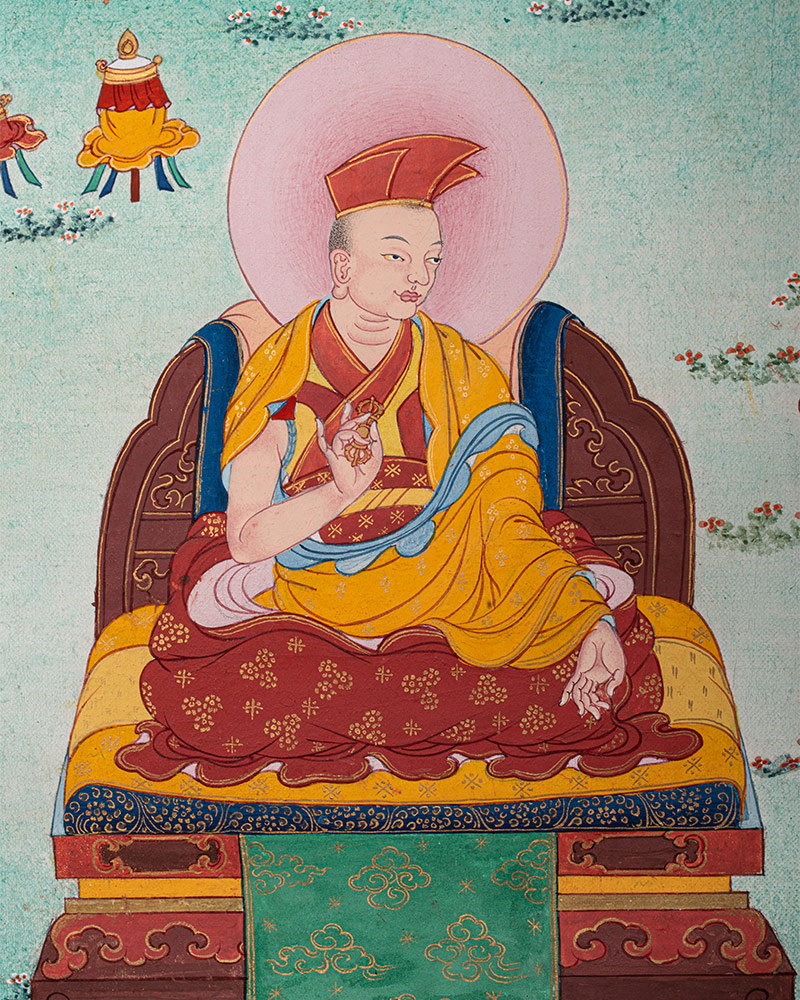
Dungse Rigdzin Chöpel was born in 1904 as the son Lama Tsewang Tamdin. His siblings included his two younger brothers, Dordo and Ape, and one younger sister, Rigzin Drolma.
From a young age, he studied reading and writing, memorized prayer texts, and thoroughly mastered and became proficient in all the ancestral ritual practices under his father’s guidance.
When he reached adulthood, he took Dewa, the daughter of the Lama of Nubri Prok Labrang, as his consort. They had two sons and three daughters.
- The eldest son, the lineage son Pema Lhatsen, took responsibility for the Labrang.
- The younger son, Tsewang Norbu, dedicated himself solely to practice in uncertain places, such as Swayambhunath (Phagpa Shingkun) in Nepal, and, was passed away in Boudha at Labrang Residence.
- The eldest daughter, Pema Chökyi, served full-time at the Chökhang Ganden Monastery. Later, in her old age, she resided at Swayambhunath with her brother Tsewang Norbu, where she passed away.
- The daughter, Dékyi, married into the Leru area, and she has many descendants there today.
- The daughter, Onyag, settled in the Nyilö region and had three sons and two daughters.
Regarding the reception of empowerments, transmissions, and pith instructions, his own record of received teachings (San Yig) shows that he received the Dzogchen Gongzäl (The Clear Expanse of the Great Perfection), the Thukdam Nyenpa Lha Sum (Three Deities of Commitment), the complete empowerments and transmissions for the Kagyé Sangwa Yongzog (Eight Great Mandalas, Complete Secret), the Guru Sangdü (Secret Gathering of the Guru), and the Tukjé Chenpo Yangnying Düpa (Gathering of the Innermost Essence of Great Compassion), among others, from Mes Tenzin Wangdül of Kyungphuk.
In 1945, his life’s activities concluded, and he passed into the expanse of reality (Dharmadhātu).
Rigdzin Chöpel was the twenty-third seat holder of Ngak Labrang.
24. Pema Lhatsen
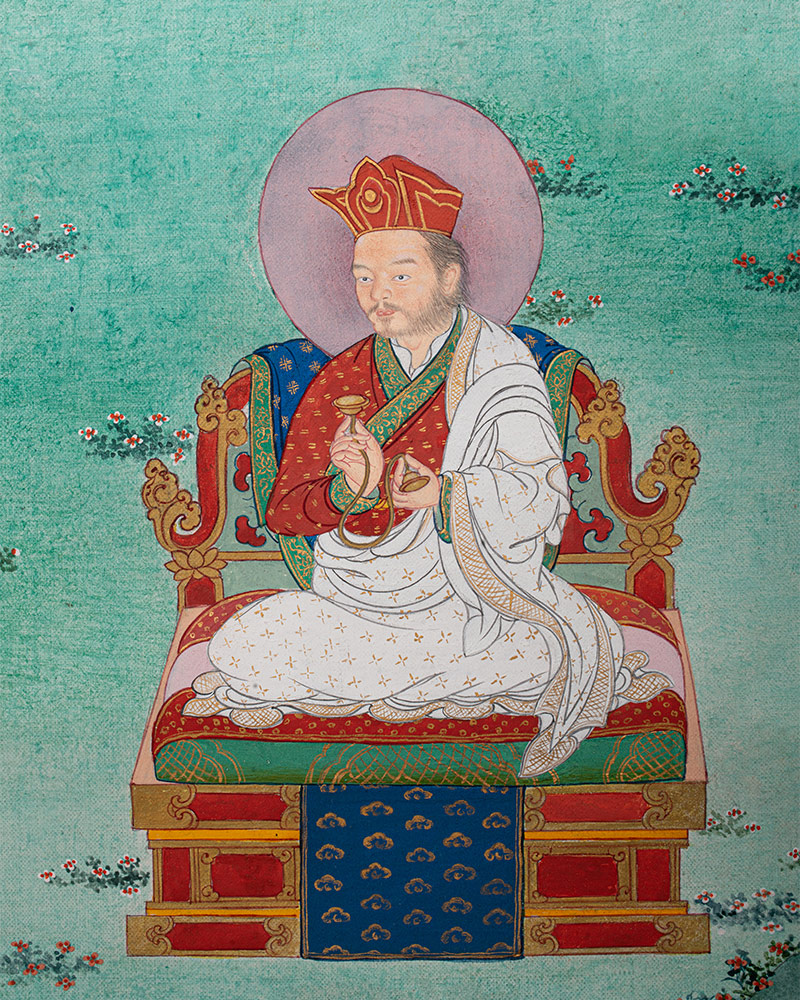
The lineage son Lama Pema Lhatsen was born in 1934 in Tsum Kyimo Lung, a hidden valley on the border of Nepal and Tibet, to his father Rigdzin Chöpel and mother Déwa.
From a young age, he studied under many virtuous spiritual friends, especially his father, Rigzin Chöpel, from whom he properly listened to and contemplated the traditional general ritual practices, and specifically the Nyingma Gyübum (The Hundred Thousand Nyingma Tantras), the Terma teachings of Guru Choekyi Wangchuk, six volumes of the Jatsön Nyingpo, and the complete cycle of the Kagyé Sangwa Yongzog.
He met the 16th Gyalwang Karmapa and saw the Great Crown that liberates by seeing (Tongdrol Chenmo). He received the Kālachakra Empowerment (Dü Kor Wangchen) twice from His Holiness the 14th Dalai Lama. He received the scriptural transmission (lung) for the entire Kagyur (Translated Words of the Buddha) from the late Kyabje Chuzang Rinpoche. He received many Dharma cycles of the Drukpa Kagyu tradition from Lopön Tsewang Norbu, the lineage holder of Dragkar. He thoroughly studied White and Black Astrology (Tsi Kar Nag) under Lama Namkha Rigdzin of Drewo Labrang.
At the age of 16, his father passed away, and he had to assume full responsibility for the Labrang. He diligently maintained the unbroken practices (Phyag Len Choga Chö Yöd) of the Tsum Ngak Labrang’s transmission lineage, preserving all the profound instructions and restoring many religious practices that had declined.
He took Drolma, the daughter of the wealthy community leader Mes Nyima Ngodrub and Tsering Buti of the Tsum Chökhang family, as his consort. They had approximately thirteen children, of whom four are still alive today.
He consistently maintained several annual retreats and rituals:
- A one-week Lama Chöpa practice was held at the Labrang every third Tibetan month.
- The eight-part Nyungne (fasting) practice was held at Dondrub Ling Monastery every fourth Tibetan month.
- The Kagyé practice was held without fail at Paro Lhakhang every seventh Tibetan month.
- The Narak Chenmo ritual was performed at the end of the tenth Tibetan month.
- He entered solitary retreat (Ku Tsam) every winter at Tsedrak Monastery, dedicating himself to practice.
He was also invited by His Majesty King Birendra of Nepal (Pal Nga Den Birendra) and received a ceremonial gift, a statue.
Furthermore, he performed extensive religious activities in Tsang, Kyirong, Dzongkha, and other regions of Tibet. In the Tsum Valley, regardless of the kind of unfortunate death that occurred, he offered unconditional spiritual services (Ngo Mön Kurim Dogpa), including prayers, rituals, and aversion rites, day and night, providing invaluable service to the community.
On the morning of the 4th day of the 12th Tibetan month in the year 2000, while reciting the Le’u Dün Ma (Seven-Chapter Prayer) as usual, he passed away peacefully without any suffering. Dungse Lama Pema Lhatsen was the twenty-fourth seat holder of Ngak Labrang.
At Present, Dungse Lama Pasang Phuntsok, Son of Lama Pema Lhatsen, is currently the seat Holder of Ngak Labrang.
- 1. Guru Choekyi Wangchuk
- 2. Principal Son, Pema Wangchen
- 3. Ngakchang Sangngak Dorje
- 4. Guru Gaga Vajra
- 5. Khyenrab Dorje
- 6. Norbu Tenpa
- 7. Ngakchang Yonten Phuntsok
- 8. Tenzin Norbu
- 9. Ngakchang Düjom Dorje
- 10. Rigdzin Tobden
- 11. Zilnön Dorje
- 12. Rechung Dorje
- 13. Pema Tenkyong
- 14. Jamyang Dorje
- 15. Chökyong Tenpa
- 16. Pema Tulku
- 17. Ogyen Nyima
- 18. Pema Zilnön
- 19. Phurnag Gyaltsen
- 20. Ngakchang Tamdrin
- 21. Lhatsen Sönam
- 22. Tsewang Tamdrin
- 23. Rigzin Choephel
- 24. Pema Lhatsen