Naak (Dondrup Ling) Monastery
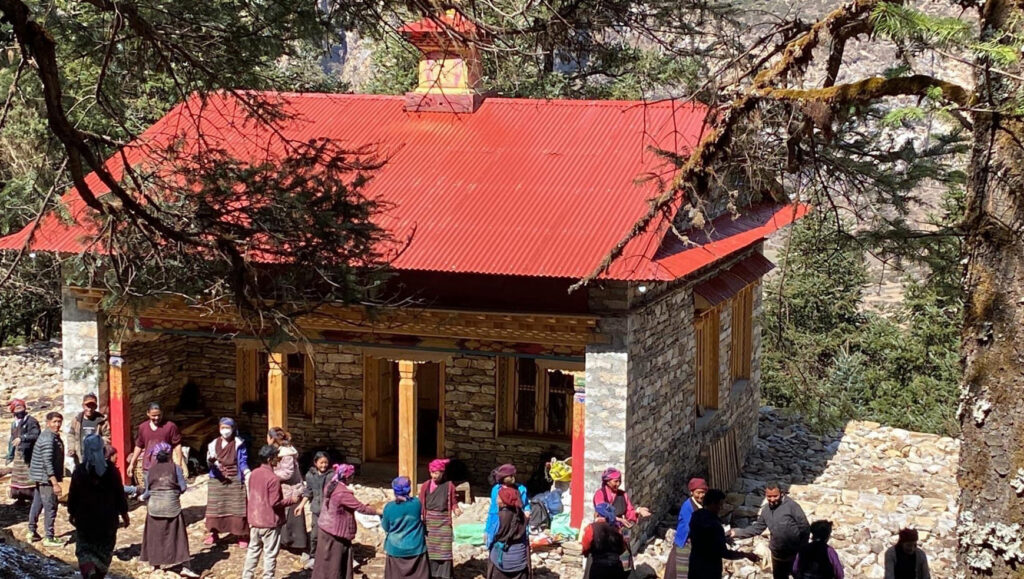
According to ancient folk saying among the people, there’s a saying, “three Mother villages and the Monastery is Dondrup Ling.” This monastery is renowned as one of the principal seats of Guru Chökyi Wangchuk and is the largest mother monastery of Ngak Labrang. It’s also known as the Forest Monastery (Naak Gonpa) and was the first monastery to emerge under Ngak Labrang.
The monastery is situated on a flat expanse, like a turquoise mirror, nestled in a valley adorned with fragrant forests below the mid-section of the great mountain known as the Kabgye Mountain. Its peak is a rocky outcrop, sometimes crowned with a white, snowy umbrella, soaring high into the blue sky. At the base of the mountain, a clear, cool river flows gently and continuously from the high plateau. Below the hill, on a vast, lush green plain, the communities of Leru and Ngakyu Village are settled like precious turquoise inlaid on gold. Directly opposite Dondrup Ling Monastery, facing it, lies the well-known Tsedrak Ösel Chöling Monastery, which was established on a majestic and stable great rock very early on.
The monastic code of Dondrup Ling explicitly states that it is the mother monastery of Ngak Labrang: “The supreme emanation of Padma’s teachings, Trisong, of the Nyang lineage, of the Iron element, named Surya, also known as Nyima Özer (in essence, Nyang Nyima Özer is an earlier incarnation of Guru Chöwang), named Chökyi Wangchuk. From him, the lineage continued unbroken, strung like a string of pearls. The seat of these lineages, the monastery, is called Dondrup Ling.”
The presence of the Eight Stupas in the monastery today, crafted by Terchen Guru Chökyi Wangchuk himself, further confirms that this monastery is indeed an important seat of Terchen Guru Chökyi Wangchuk.
The significant religious practices of the monastery include the Nyungne Kava Chagyed (Eight-Pillar Fasting Retreat), the Saga Dawa (Buddha’s Birth, Enlightenment, and Parinirvana) auspicious festival, as well as Kabgye (Eight Precepts), Dadoe (ritual offerings), and Lha Sol (deity offerings). The monastic code also states that in later times, the Ganden Ngachöd (Ganden Five Offerings) is also observed.
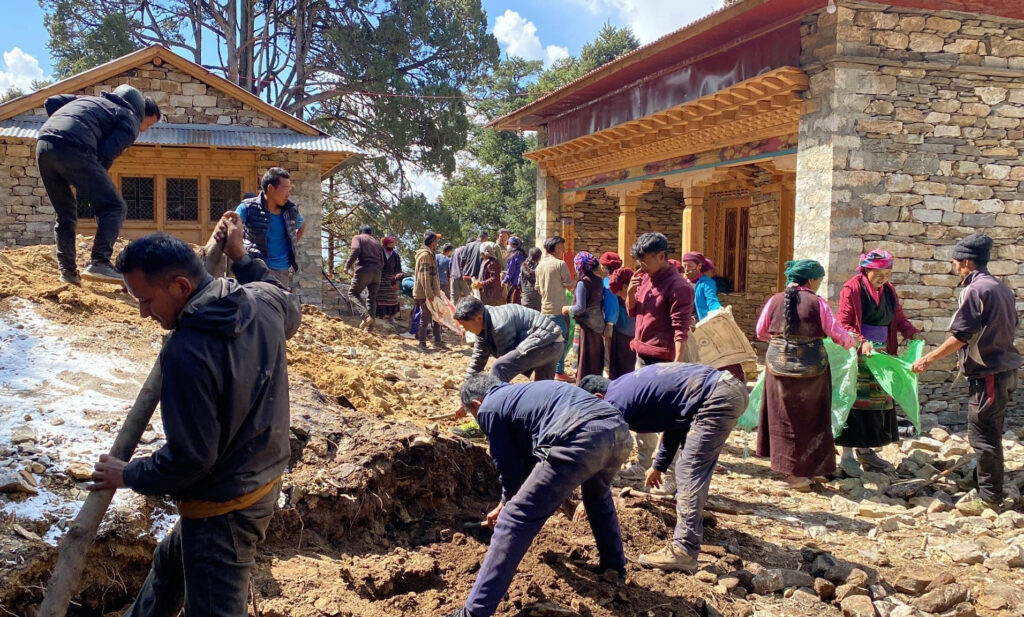
It was in a ruined state, and Dungse Rinpoche rebuilt and consecrated it in 2012. However, it was again destroyed by the 2015 earthquake. Now, it is on the verge of completing its reconstruction.
Tsedrak Ösel Chöling Monastery
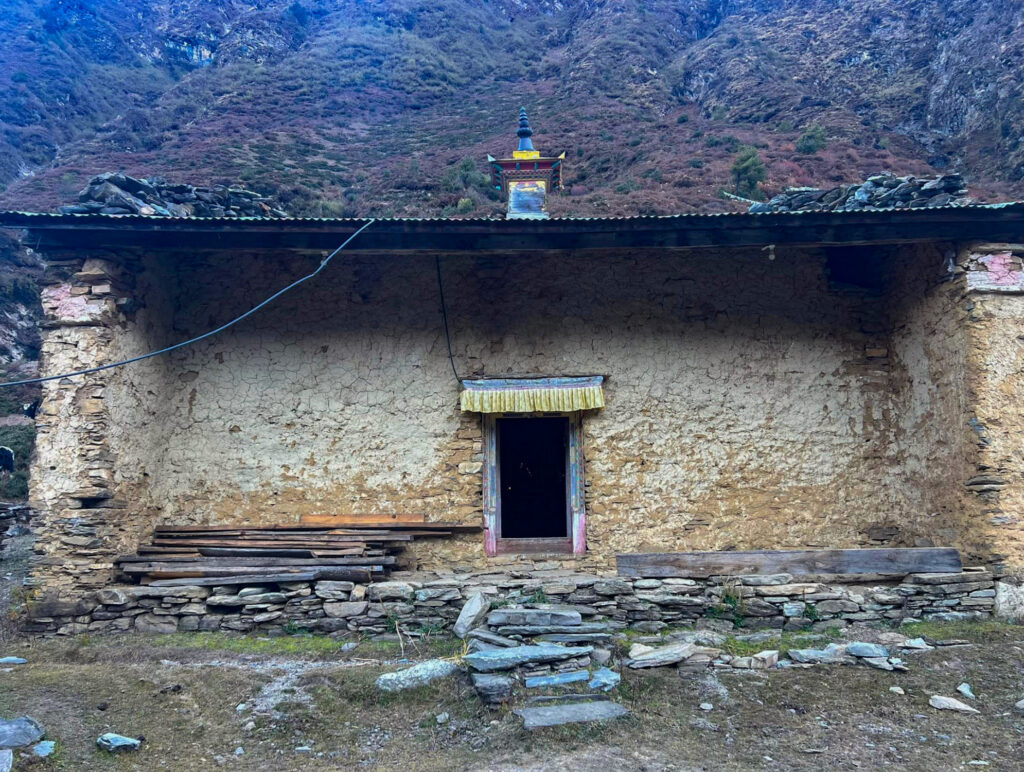
Tsedrak Ösel Chöling Monastery is located on the right slope of a mountain, not far from Ngak Labrang. The name “Tsedrak” (Peak Rock) derives from its foundation on a stable, towering rock. It appears that the site was originally called Dzongdrak (Fortress Rock), as an old text on the founding of Tsum records: “Because the land was mounted on its peak, it was named Dzongdrak.”
The monastery stands on the sunny side of the mountain, facing three peaks in a row. According to tradition, the central mountain is the Kabgye site (connected with the Eight teaching), the right mountain is associated with Guru Sangdue (Guru Guhasamaja), and the left mountain with Avalokiteshvara (Thukje Chenpo). Beneath the monastery are numerous sacred caves known as Gomchen Gyatsa (Hundred Meditators). Inside, traces of stacked stones remain, suggesting that these caves served as residences or meditation places for practitioners before the monastery was built. The founding of the monastery is attributed to Ngak Labrang Lama Yonten Phuntsok.
The biography of Tertön Garwang Dorje, recognized as a reincarnation of Rigdzin Gödem, notes that he came to Tsum via Mon La, and practiced at Tsedrak. He may have been invited by Ngak Labrang Lama Zilnon Dorje, though this requires further study. What is clear, however, is that Tertön Garwang Dorje proclaimed Tsedrak to be the second Zangdok Palri (abode of Guru Padmasambhava). This is confirmed in the notes of Ngak Lama Dungse Tsewang Tamdrin: “I, Lama Tsewang Tamdrin, received this from my root guru, the venerable Jigme Chöjor, who personally stated that Tsedrak, the practice place of Tertön Garwang Dorje, is the second Zangdok Palri.” His meditation seat remains preserved to this day, along with sacred relics such as a phurba (ritual dagger), a hat, and a khatamka (trishula), all blessed by the tertön himself.
Behind the monastery flows a sacred spring (terchü) connected with Guru Chöwang. Though often dry, the water is said to flow abundantly whenever major practices are held at the monastery, enabling everyone to partake in its blessing. While the terma teachings of Tertön Garwang Dorje were once widely practiced in Tsum, their presence has since diminished.
Tsedrak has long been a central site for retreat and practice for the lineage holders of Ngak Labrang. Ngak Lama Lhatsen Sönam, for example, received numerous Dharma transmissions here from Lama Jigme Chöjor, including the complete Kabgye of Guru Chökyi Wangchuk, the Thri Dorje Trengwa (Vajra Rosary of Instructions), Thödrol (Liberation Through Hearing), the Mani Kabum, and the Do Mang (Many Sutras). His colophons clearly state: “I, Lhatsen Sönam, received these from my root guru, the precious one, in Tsedrak Ösel Chökar.” Similarly, scrolls survive documenting the profound instructions that Ngak Lama Tsewang Tamdrin received here from his master Jigme Chöjor.
Pangton Lama Pema Lhatsen made Tsedrak his annual retreat site without fail, while Dungse Pema Rinpoche completed the ngöndro (four hundred thousand preliminary practices) of the Nyingthik tradition here in retreat alongside his father. Oral accounts also recall that his great-grandfather, Ale, lived and practiced here for his whole life.
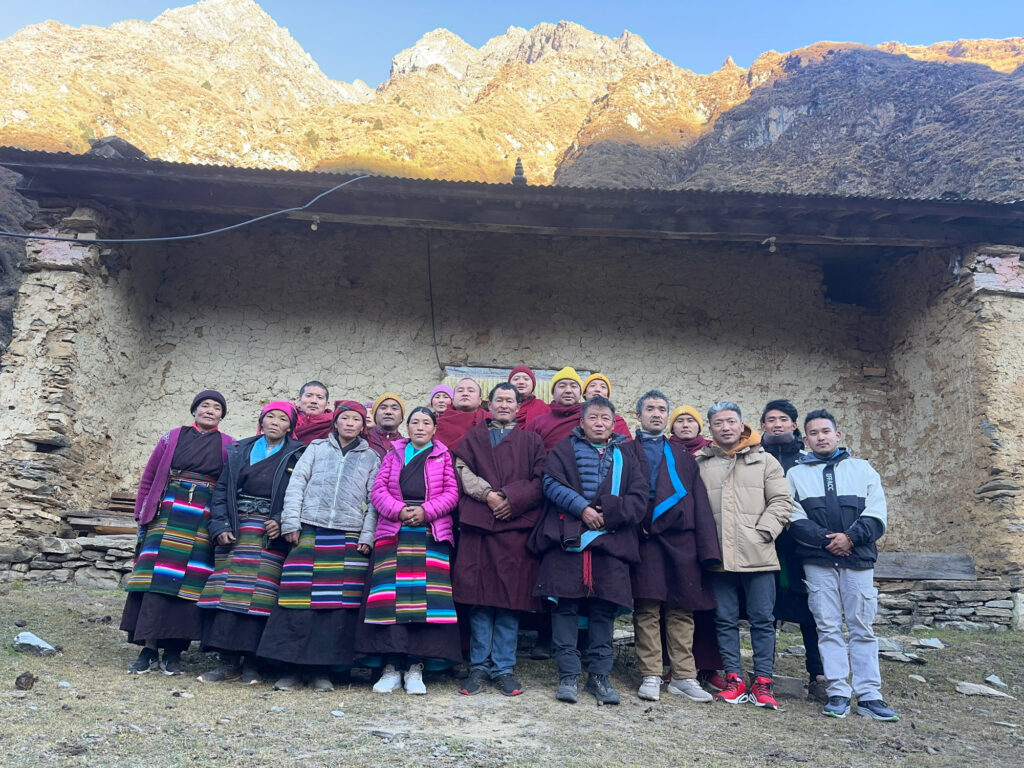
In 2011, with the guidance of Dungse Pema Rinpoche and the leadership of Dungse Pasang Phuntsok, the community members of Leru and Ngakyü, along with Tsoksur Tsering Paljor, united their efforts to construct a new temple. The main statues, three-foot gilt-bronze images of the Three Kayas (Dharmakaya, Sambhogakaya, and Nirmanakaya Buddhas), were brought from India. The side walls were adorned with paintings of the Yidam Thukdrub deity assembly and the Eight Manifestations of Guru Rinpoche. A smaller shrine was also built to honor the meditation seat of Tertön Garwang Dorje.
After the construction was completed, Dungse Pema Rinpoche returned from abroad to consecrate and bless the temple. The gathering included lamas, monks, nuns, and lay devotees. The sacred statues were consecrated with the Thukdrub Barchad Künsel (Eliminating All Obstacles) practice and purification rituals. Upon completion of the main offerings, a gentle rain fell, settling the dust of the earth, an auspicious sign that brought great joy to everyone present.
Today, the monastery’s central practice tradition continues to be the terma teachings of Guru Chöwang. In particular, the annual seven-day Thukdrub practice has been maintained without interruption. When the monastery’s senior chant master (umdze) reaches old age, he is honored as a Tsokpön and regarded as a Vajra Master. Past chant masters include Me Phurbu Chöphel, Me Karma Chöphel, and Me Pasar, while the living masters are Me Dawa Dorje and Dorje Phuntsok. Under the leadership of Dungse Pasang Phuntsok, the annual rituals and daily practices of the monastery continue to be upheld with devotion and precision by the Ngak Labrang community.
Dzong Lhakhang Thukje Chöling
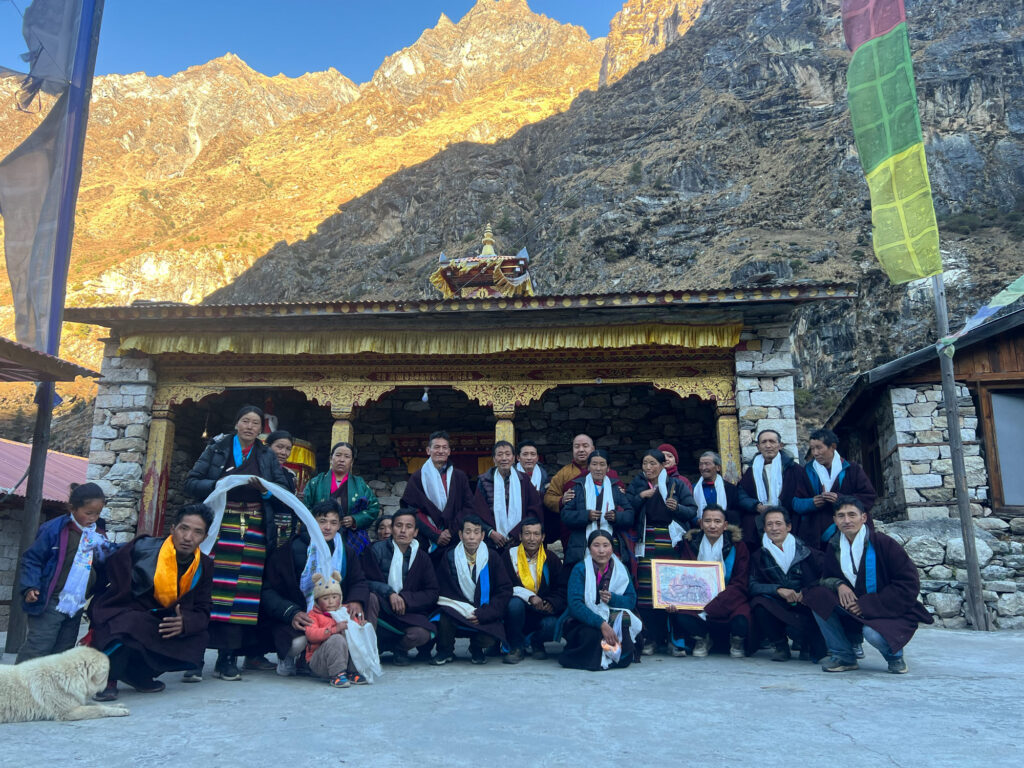
Dzong Lhakhang Thukje Chöling is situated atop a moderately sized mountain, firmly rooted in rock and shaped like a mandala. It is one of the temples established by the great Terton Guru Chökyi Wangchuk in each Tsumba tribal village.
Its inner relics include statues of the three Kayas (Dharmakaya, Sambhogakaya, and Nirmanakaya), an ancient and highly blessed statue of Gudrak, and later-erected statues of the Eight Manifestations of Guru Rinpoche. As is natural for structures to experience wear and tear over time, the temple underwent a renovation in 1983 with the support of the Nepalese government, led by the venerable Dungse Pema Lhatsen Rinpoche.
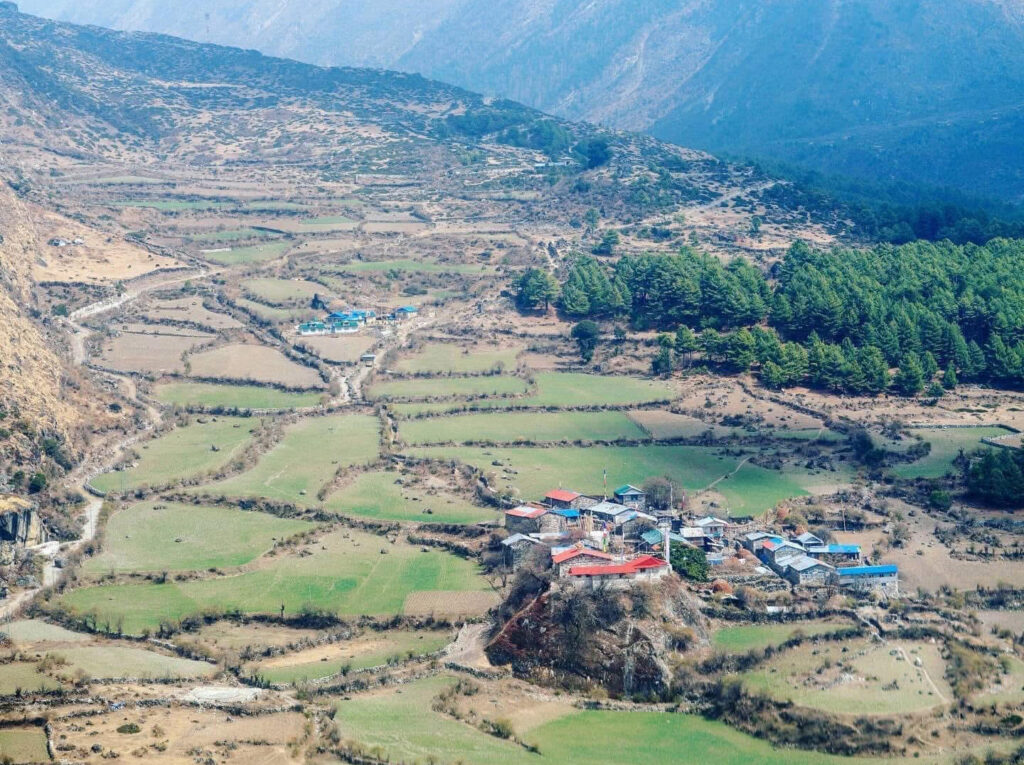
In 2007, Dungse Pasang Phuntsok took the lead in a renovation effort, supported by the local community. Dungse Pema Rinpoche commissioned three-foot-tall statues of the three Kayas from India and had them brought to the monastery. The monastery’s physical structure and its sacred contents were completed. In 2010, during the auspicious Lhabab Düchen (Buddha’s Descent from Heaven) festival, Dungse Rinpoche and other esteemed lamas, as well as the monastic community and local people, gathered to perform an elaborate consecration ceremony for the entire monastery, both inside and out.
The monastery’s annual rituals include the Yang Nying Drubpa of Thukje Chenpo (Heart Essence Practice of Avalokiteshvara). Every two years, the Narak Drubpa (practice for liberating beings from the hell realms) is held, drawing a large congregation of people. Regular Tsechu (tenth-day rituals) are observed, along with shorter practices. Every two years, eight nuns from Rachen Nunnery perform the Nyungné Chagyed (Eight-branched fasting retreat). This monastery serves as a vital center for performing rituals for both the living and the deceased, particularly for those in the Dzong area.
Former chant masters (Umdze) include Mè Namgyal and Mè Tsering Wangchuk. Currently, Karma-la serves as the chant master, diligently maintaining the traditional ceremonies.
Leru Lhakhang Tashi Thongmön
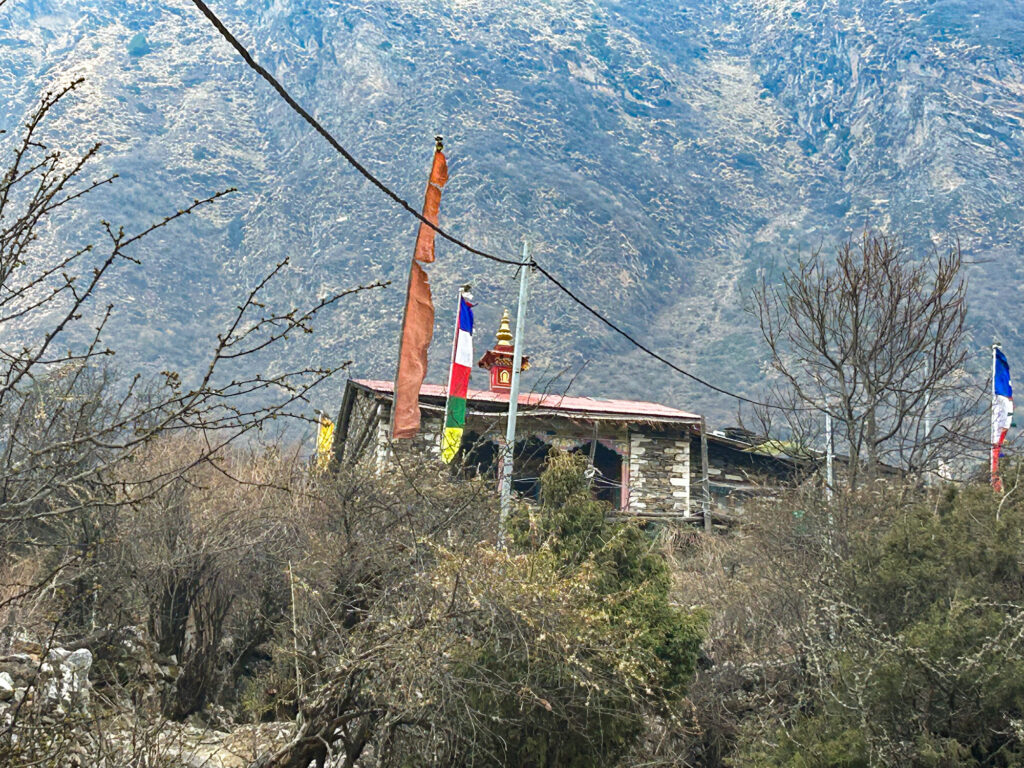
Leru Lhakhang, also known as Tashi Thongmön, is described in Tsum history as the oldest monastery in Tsum. The monastery has a wondrous shape, appearing as if nestled in the lap of Jetsun Drolma (Tara). Its name, Tashi Thongmön, means “Auspicious Wish-Fulfilling Vision.” According to old Tsumpa writings, the reason for this name is explained: “The father Fawa Jamo, having received Dharma teachings from his guru, wished for the attainment of this Buddhist Dharma. Thus, the monastery was named Tashi Thongmön.”
Annually, the local community collectively performs the Konchok Chidü Drubpa, a Terma teaching of Terton Guru Chöwang, for seven days, and observes the tenth day of the month regularly. Under the leadership of Dungse Pasang Phuntsok, and with the support of committee members Kalsang Phuntsok, Tsering Phuntsok, Tashi Dorje, Tenzin Palbar, Apè Ringpo, and Tenzin Wanggyal, as well as devotees from both Leru and Ngakyü, a new temple with four pillars was rebuilt to match the original dimensions of the old monastery. While all monasteries in the Tsum region traditionally had stone roofs, which often led to water damage, the new temple is now covered with thick corrugated iron sheets.
The monastery’s main inner relics, ancient clay statues of the Gudrak Sengsum (Guru Drakpo, Simhamukha, and Garab Dorje), which are exceedingly blessed and vibrant, were restored wherever parts or paint had deteriorated, and are now enshrined as the principal relics. The murals of Thukdrub thangkas on the temple walls were also successfully created. In the 17th month of 2018 (likely an error in the original text, perhaps 7th or a date formatting variation), Dungse Pema Rinpoche presided over a grand consecration ceremony for the three holy objects, with other relevant lamas and monastic communities (both monks and nuns) extensively gathered, performing the Barche Künsel (Eliminator of All Obstacles) practice and a purification ritual. The monastery and local people offered a mandala and three holy objects to Dungse Rinpoche, who in turn bestowed blessing cords and blessing pills. To celebrate the successful completion of the monastery’s restoration, a large number of devotees gathered for a magnificent day of joyous celebration, concluding auspiciously with songs, dances, and other recreational activities.
The monastery’s regular ceremonies include the tenth day of each month without fail. Additionally, when there is sickness or death in the valley, the people of Leru and Ngakyu traditionally perform Tsokbum (offering ceremonies) at this monastery, especially the Zhitro (Peaceful and Wrathful Deities) rituals, dedicated to the merit of the deceased.
Kaaye Monastery
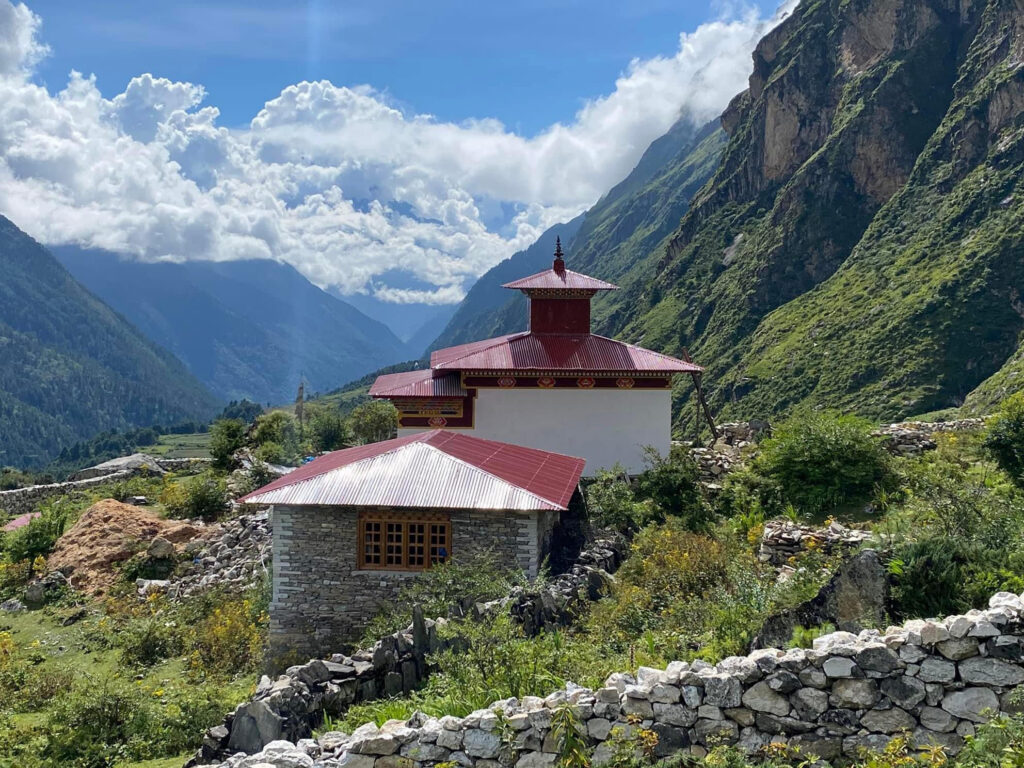
Kaaye Monastery, formerly known as Gakye (“Clearing the Cessation”), is situated at the foot of a mountain between Dzong and Ngakyü Leru. In earlier times, it was surrounded on all sides by captivating snowy peaks, but with the effects of climate change, the snow on the mountains behind it has gradually disappeared.
On both sides of the monastery, various natural patterns can be seen on boulders and rocks. There are also numerous mortar-like depressions carved into stones, locally called Gogphor in the Tsum dialect. The area is regarded as a non-human dwelling place: unusual noises are often heard at night, and some people claim to have encountered tall mysterious figures. Because of this, travelers have long felt uneasy passing through the area after dark.
Tradition holds that the original monastery was founded during the time of Lama Tenzin Norbu, the eighth lama of the Ngak Labrang lineage. Among its main sacred treasures were the woodblock printing plates for numerous important texts, including the Vajra Cutter Sutra, Drimed Shakpa (Confession of Stainlessness), Zungdü (Collection of Mantras), Kunzang Mönlam (Prayer of Samantabhadra), and the Ka-Pè (Collected Works of the Kangyur and Tengyur). Oral tradition recounts that these woodblocks were commissioned by the “Three Villages of Tsum,” who invited skilled woodcarvers from Kyirong to produce them. The monastery also enshrined a blessed statue of the Medicine Buddha.
In the past, a seven-day ritual called Kayé Chöpa was held annually at the monastery. The monastery also possessed around five fields of farmland for its support. There was likewise a tradition known as Dripa, in which the complete Kangyur was recited by turns in nine villages, from Chokang to Nile. After each village completed its portion, everyone would gather at Kaaye Monastery for a day, similar to the Gakgye (End of Summer Retreat) ceremony, to recite the Drimed Shakpa, confessing any errors in reading or recitation.
Over the centuries, the monastery was periodically renovated by the people of Ngak Labrang, Leru, and Ngakyü. The venerable Dungse Pema Lhatsen Rinpoche also carried out a major renovation during his time. Traditionally, the family of Mè Paljor from Dzong served as the monastery’s caretakers. In more recent generations, Mè Paljor and his son Chödar were entrusted with the protection of the woodblocks.
However, in 1985, due to waning commitment to the Dharma among certain individuals, half of the woodblocks were taken to Chokang, while the remaining half were transferred to Leru through the joint efforts of the people of Leru, Ngakyü, and Dzong. This dispersal of the woodblocks marked the beginning of the monastery’s decline.
At present, the main ritual traditions once performed at Kaaye Monastery are upheld at Leru Monastery. The restoration of the Kaaye temple itself is now on the verge of completion.