Introduction Tsum Ngak Labrang
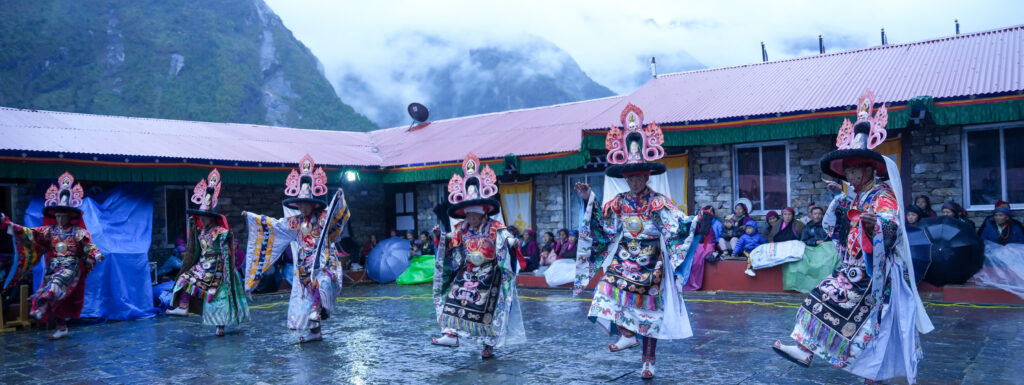
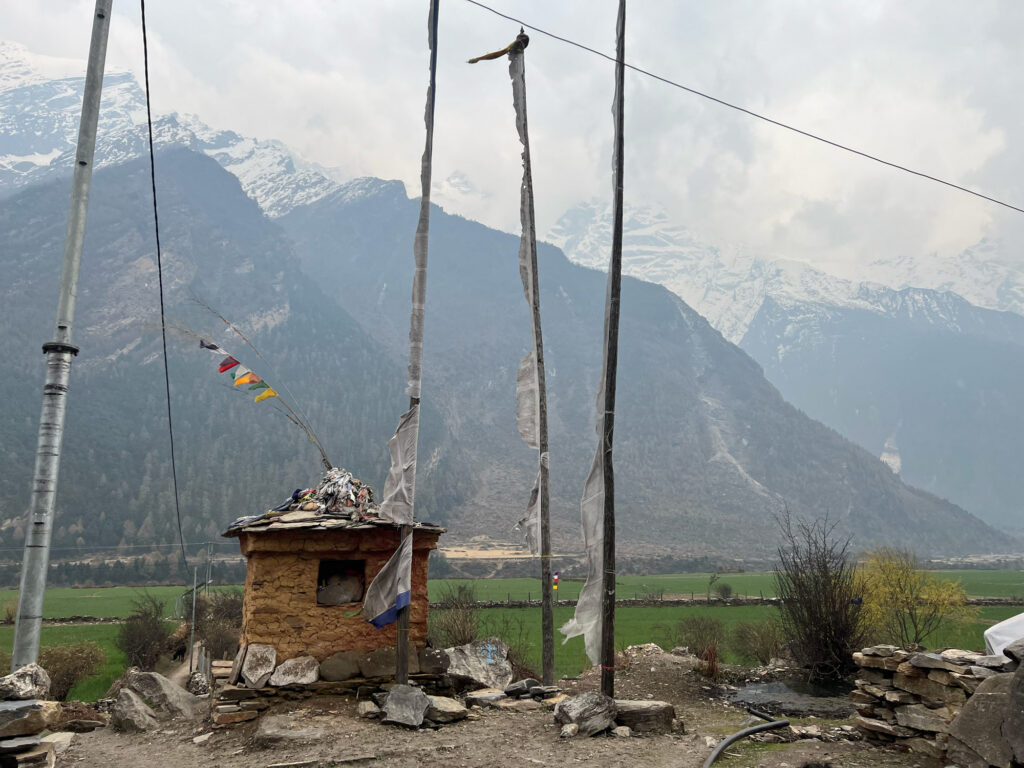
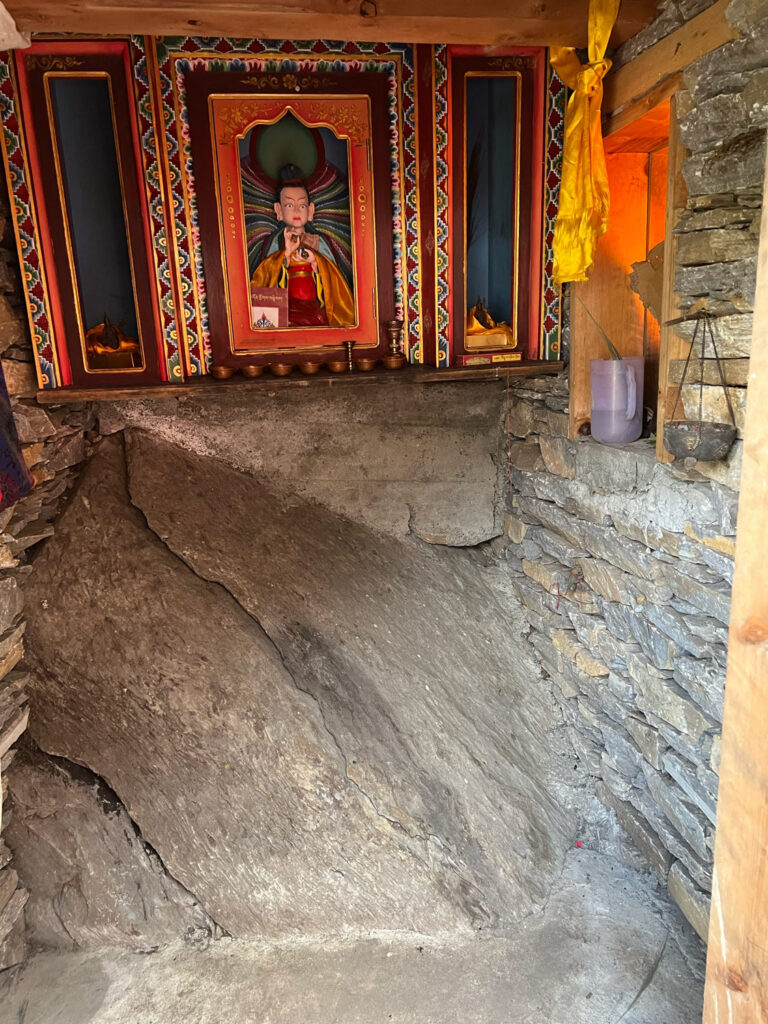
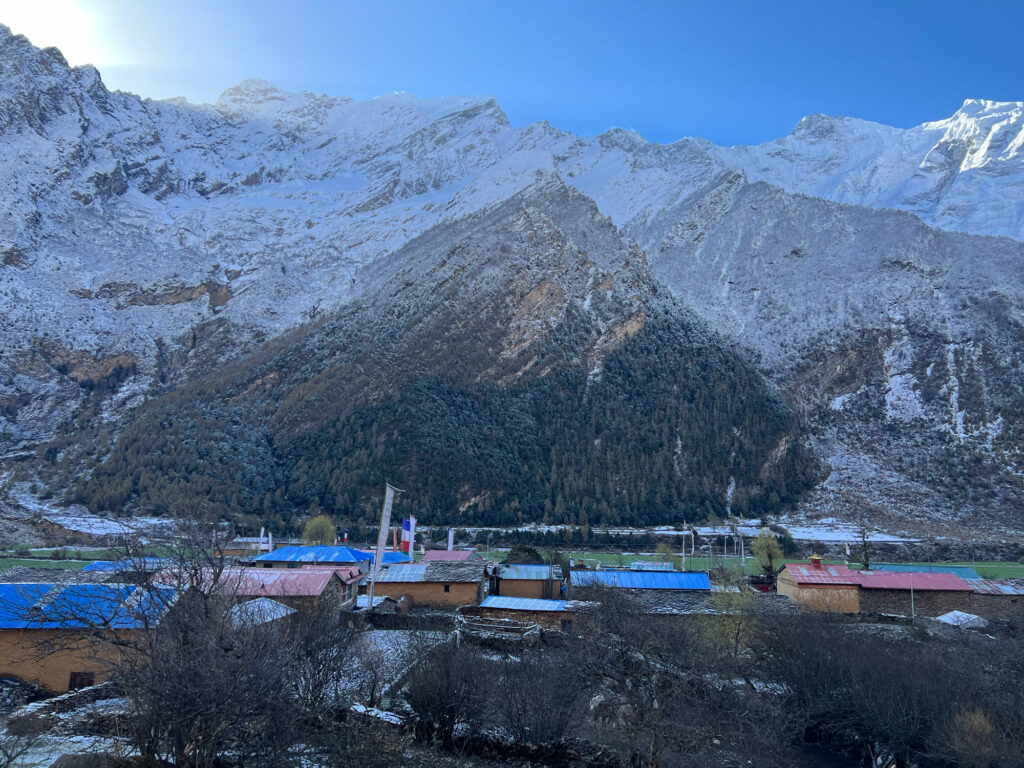
Tsum Ngak Labrang is regarded as the earliest and most influential Labrang (religious residence) in the sacred Tsum Valley. Ancient Tsum scriptures affirm this by stating, “Ngak is the first among the land.”(ཡུལ་ལ་སྔ་བ་སྔགས།) The site of its establishment was chosen according to prophecies and auspicious geomantic signs: a self-arisen Avalokiteśvara appeared in the rocks to the southwest, the eastern mountains resembled white silk drapes, and the central plain lay like a vast basin. Originally, the first settlement was at Sapuk(ཟ་ཕུག), between Lar Village and Rachen Nunnery, where a large community called Ngakpa Gyadong(སྔགས་པ་རྒྱ་གྲོང་།) lived before being displaced by a landslide. The present village was resettled just across the river from that place.
The valley of Ngak is described in sacred texts as a beyul, a hidden land blessed by Guru Padmasambhava and many foremost Vidyādharas. Its landscape is particularly auspicious: behind stands a great mountain clothed in fragrant forests and reaching to the sky, while the mountain in front shines like a heap of jewels, capped with snow and ringed with green woods. The central plain is wide and fertile, watered by a crystal-clear river flowing down from the high glaciers. These natural features ensured abundant harvests, flourishing settlements, and prosperity for its people. The villagers of Ngak became known for their kindness, honesty, and contentment, upholding both Dharma and the ethical codes of ordinary life, while sustaining themselves through farming and pastoral work without dependence on others.
At the heart of Ngak Labrang is the twelve-pillared temple of Tsum Monastery, erected on a site blessed by the great treasure revealer Guru Chökyi Wangchuk. Within are enshrined statues, scriptures, and stupas representing his lineage of treasures, beautifully arranged like ornaments adorning the Labrang. Beneath the temple lies a naga shrine, believed to be home to serpent deities that swiftly grant aid when invoked. Nearby is the small retreat-site Drak Seng Gonchung(བྲག་སེང་གེ་དགོན་ཆུང་།), once used by practitioners, from which relics are still uncovered. Local lore recalls a Ngak Lama who flew from there toward the front mountain, dropping his begging bowl in a field called Chöshing Parkan, where a mound still marks its fall.
The origins of Ngak Labrang are traced to the great tertön Guru Chökyi Wangchuk(1212-1273 A.D.), who established the Labrang while spreading the Dharma in Tsum. He practiced the profound teachings of sutra, tantra, and pith instructions here and left behind a sacred footprint on a rock in front of the Labrang’s residence as a sign of his enlightened activity. That footprint, said to match the size of a thirteen-year-old’s foot, remains as a living symbol of blessing and a prophecy for the flourishing of his lineage in this land.
From his time onward, Ngak Labrang was continually upheld by an unbroken lineage. Its central practices were the treasure teachings of Guru Chökyi Wangchuk, including the complete Secret Eight Precepts and the Guru Sangdü cycle. Over the generations, the Labrang also maintained practices from the Southern Treasures, Amitabha of Namchö, Jatsön Könchok Chidue, the Nyungne fasting retreat of Palmo, and later, important cycles from the Northern Treasures as well.
A unique feature of Ngak Labrang is its custom of referring to one’s father as “Akho” (uncle/elder brother), a habit said to originate from Guru Chökyi Wangchuk himself, who once addressed his own father in this way. Remarkably, children of his lineage continue this tradition naturally, even without being taught.
During the time of Ngak Lama Rechung Dorje, his two gifted sons, Pema Tenkyong and Jamyang Dorje, became key holders of the Ngak Labrang lineage. They lived and served together for many years, but later Jamyang Dorje established a separate Labrang known as Khangsar Labrang. This division, supported by their father, led to a decline in the original Labrang and caused serious conflicts between the brothers, some of which required intervention from local authorities. Many related court documents and sealed records still exist. Oral tradition recounts that during one dispute over sacred objects, they broke a Hayagriva mask while pulling it apart. Numerous old scrolls describe disputes over lands and property, and the place where they later took reconciliation oaths still carries a name linked to that event.
During the 17th century, Lama Zilnon Dorje of Ngak Labrang became one of its most illustrious figures. He is the 11th seat holder of Ngak Labrang. He spread Dharma widely in Tsum, Nubri, Kyirong, and Dzongkha, and was recognized by both the Fifth Dalai Lama and the King of Gorkha. The Dalai Lama conferred upon him the special symbol of a “Butham” (a wheel of power), affirming his rightful authority over Tsum, while the King of Gorkha granted him a copper-plate charter known as Tamapatra. His father, Rigdzin Tobden, is also recorded as the caretaker of Boudhanath Stupa in Nepal. These honors demonstrate the Labrang’s growing religious and political significance during that period.
In later generations, another master, Phurnag Gyaltsen, likewise received a copper seal and royal commendations from the King of Gorkha for his leadership and service to both Dharma and community. Such recognition further elevated the Labrang’s standing, making its leaders protectors of both spiritual and worldly welfare in Tsum.
From its ancient beginnings until today, Ngak Labrang has remained the heart of Guru Chöwang’s lineage in Tsum. Rooted in prophecy, blessed by great masters, and sustained through both devotion and political recognition, it has served not only as a center of Dharma practice but also as a guardian of culture, morality, and community well-being in the sacred valley of Tsum
Lineage of Ngak Labrang
The religious practice lineage of Ngak Labrang traces its origins from the Gyalwa Gonggyü (Mind Lineage of the Victorious Ones) through Guru Rinpoche’s Eight Manifestations, Khandro Yeshe Tsogyal, King Trisong Deutsen, and the Nine Fortunate Sons of the Degenerate Age, down to the treasure revealer Guru Chökyi Wangchuk (Terchen Guru Chöwang). From him, the teachings were transmitted through successive masters, including Ngakchang Sangngak Dorje, Guru Ga Ga Vajra, Nyammed Khyenrab Dorje, Ngakchang Yonten Phuntsok, Drinchen Tenzin Norbu, Ngakchang Dudjom Dorje, Rigdzin Tobden, Drinchen Zilnon Dorje, Ngakchang Rachung Dorje, Nyammed Pema Tenkyong, Ngakchang Jamyang Dorje, and others, down to Ngakchang Tamdrin. This represents an unbroken transmission, mostly from elder to younger within the Labrang’s family lineage.
A special lineage scroll preserved at Ngak Labrang confirms this succession. It begins with Amitabha, Avalokiteśvara, and Padmasambhava, then lists Guru Chökyi Wangchuk and successive lineage masters, each associated with sacred abodes or qualities. It also invokes Yidam Hayagriva with consort, Mahākāla as protector, and concludes with offerings and prayers for siddhis. This demonstrates how the Labrang integrated guru, yidam, and protector into its living practice tradition.
In recent centuries, the lineage continued through figures such as Dungse Lhatsen Sönam, his son Dungse Tsewang Tamdrin, and his grandson Dungse Rigzin Chöphel. From him, the line branched to his sons, Dungse Pema Lhatsen and Dungse Tsewang Norbu. Pema Lhatsen’s sons, Dungse Pema Tsewang, Dungse Pasang Phuntsok, and Dungse Dawa Trashi, represent the present generation of lineage holders.
A summarized list records the continuity of this transmission, beginning with Guru Chökyi Wangchuk and his son Pema Wangchen, followed by Sangngak Dorje, Ga Ga Vajra, Khyenrab Dorje, Norbu Tenpa, Yonten Phuntsok, Tenzin Norbu, Dudjom Dorje, Rigdzin Tobden, Zilnon Dorje, Rachung Dorje, Pema Tenkyong, Jamyang Dorje, Chökyong Tenpa, Pema Tulku, Orgyen Nyima, Pema Zilnon, Purnak Gyaltsen, Ngakchang Tamdrin, and the later Dungse generations up to Dungse Lama Pasang today.
Thus, Ngak Labrang preserves the unique treasure teachings of Terchen Guru Chöwang in an unbroken line of transmission from its origins in Tibet through centuries of practice in Tsum.
Quick Look
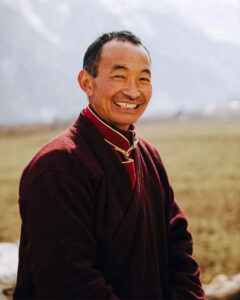
Dungse Lama Pasang Phuntsok
(Current Head of the Labrang)