The Narak Chenmo Drubpa and Gutor (Exorcism Ritual)
The Narak Chenmo Drubpa and Gutor (Exorcism Ritual)
It is a common custom among the people residing in Tibet and the Himalayan regions that religious activities are considered the most important of all endeavors. Therefore, at the end of each year, monasteries perform a secret mantra retreat (bsnyen sgrub) to sever all inauspicious events, misfortunes, and calamities of the past year. They conduct protection and repulsion rituals (srung zlog gi rim gro) to ensure that all obstacles and hindrances in the coming New Year are pacified, and that auspicious and positive endeavors flourish. This culminates in the Great Gutor (Exorcism Ritual) on the twenty-ninth day of the twelfth month, making it an indispensable and crucial annual ceremony.
The authentic Narak Drubpa (practice for liberating beings from the hell realms) from the tradition of Terchen Guru Chökyi Wangchuk is not only a crucial annual religious activity for the affiliated monasteries of Ngak Labrang but also concludes with a significant Gutor ritual. Ngak Labrang conducts the Narak Drubpa alternately, one year in Sleru and Ngak Gyü, and the next year in Dzong, sometimes also performing it in Paro. The term “Narak” is a Sanskrit word meaning “hell.” Here, it signifies a grand virtuous activity undertaken by all villagers to purify negative karma that leads to rebirth in hell.
The Longchen Gyüd states: “By merely uttering the names of the assemblies of deities in the mandala of the illusory victorious peaceful and wrathful ones even once, the sins of the five heinous deeds are purified. Damaged samaya (vows) are restored, and even the realm of Narak is shaken from its foundation. Supreme and common siddhis (accomplishments) are attained, and this life is filled with perfect well-being.”
Furthermore, there is a historical account of the Narak Khorwa Dongtruk (Shaking the Depths of Samsara and Narak) practice within the tradition of the great Terton Guru Chökyi Wangchuk of Lhodrak. As stated in his Hundred and Thirteen Chapters of Dohas (Songs of Realization): “To my own degenerate male and female disciples, I explain the shaking of Narak and the lower realms from their depths.” It appears that this tradition, established by Guru Rinpoche himself during his stay in the Tsum region, has continued to this day.
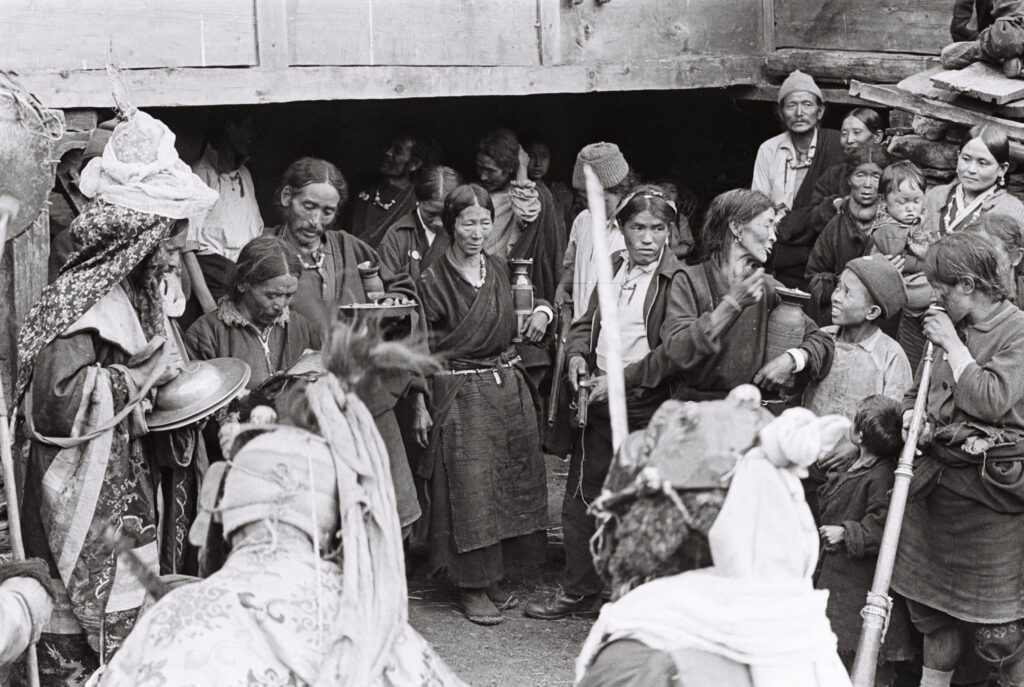
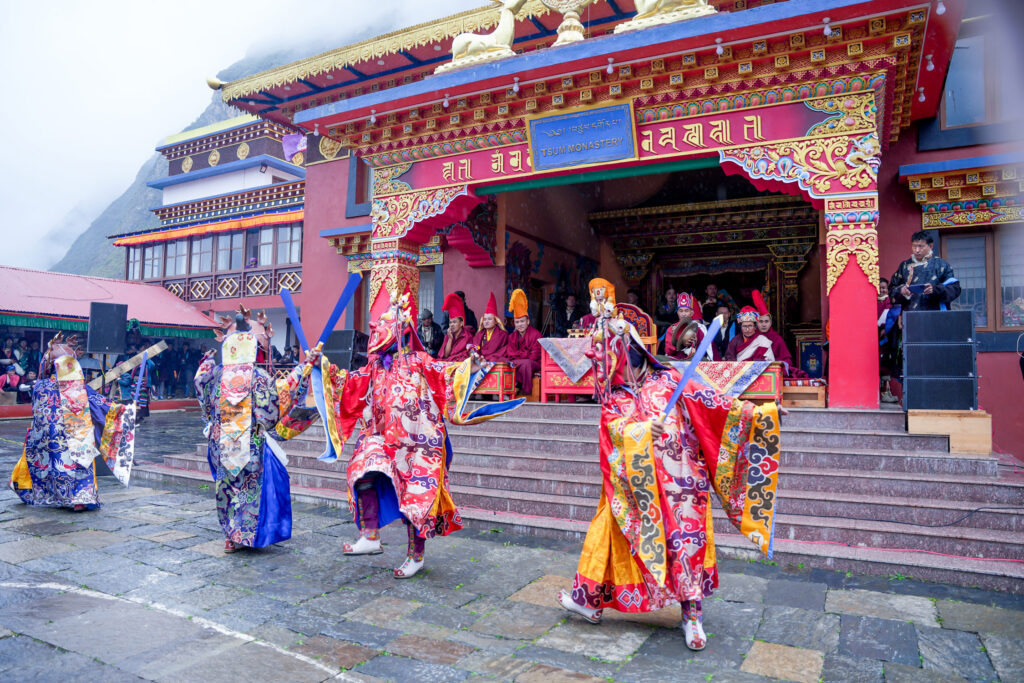
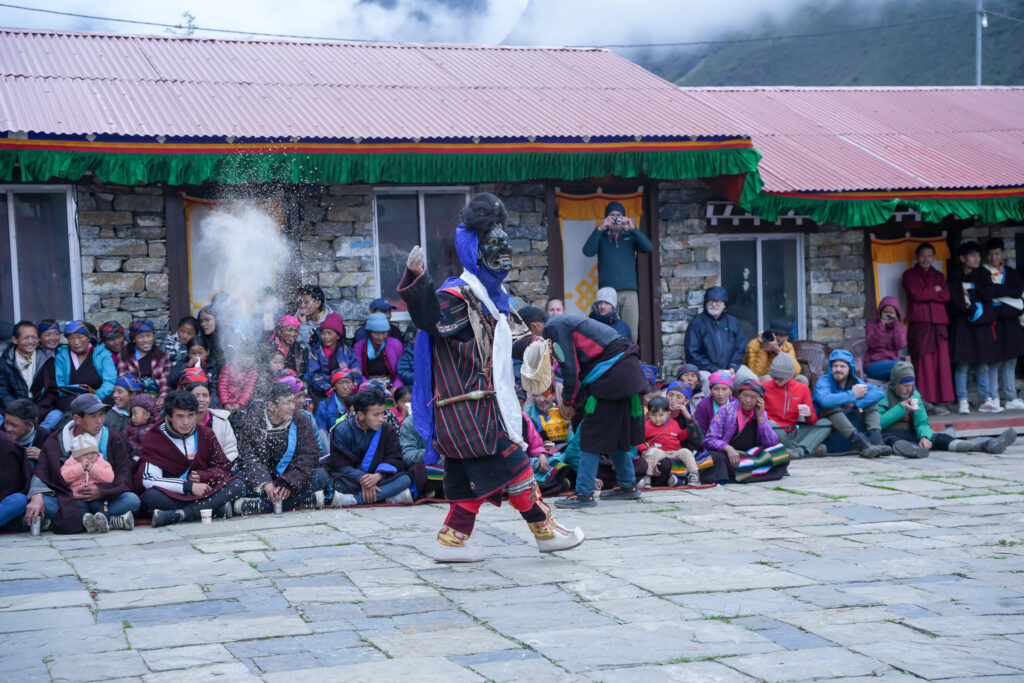
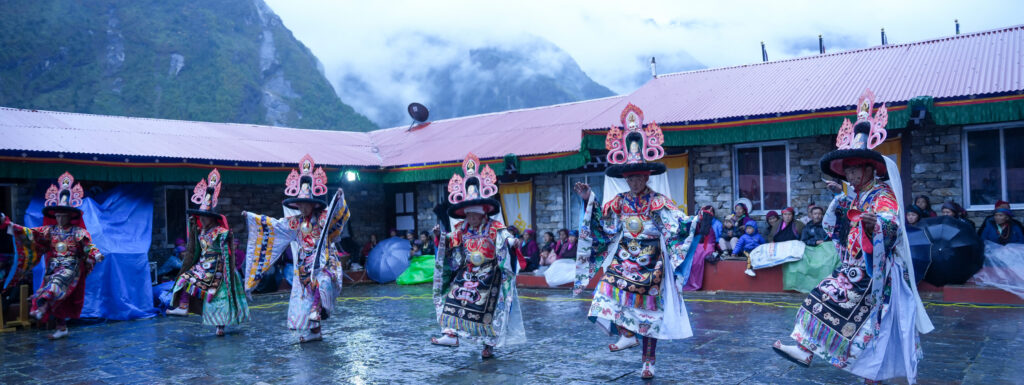
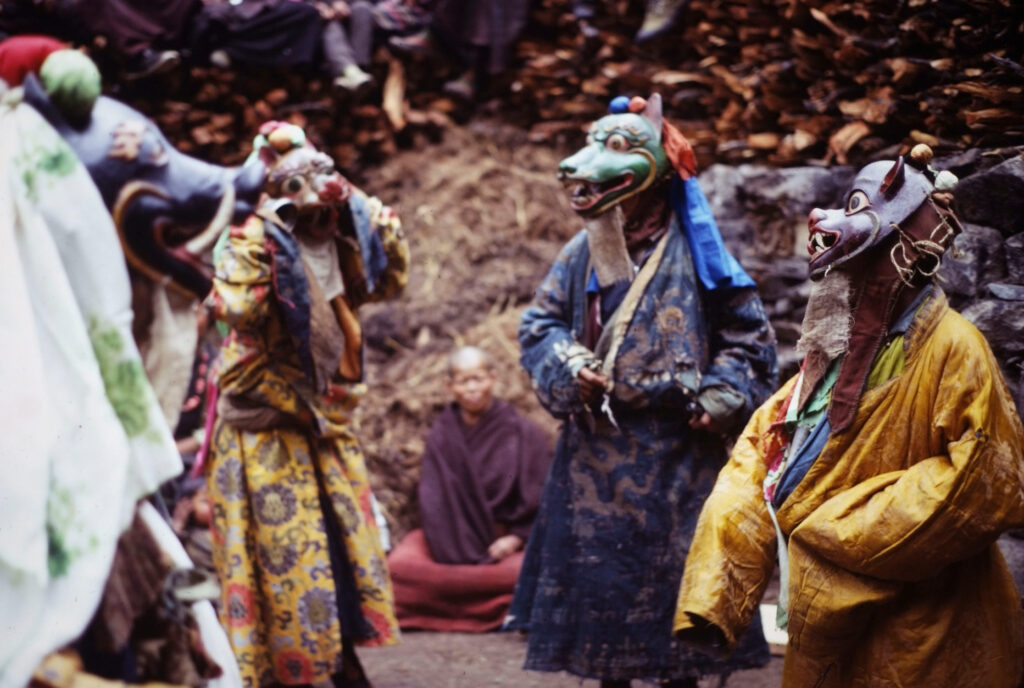
During this time, the lamas and tantric practitioners of the respective monasteries perform great practices according to the authentic ancient tradition. From the 26th to the 30th of the tenth Tibetan month, they engage in the Kagye Sangwa Yangdzog (Completely Secret Eight Precepts), Gon-ma Ning Kangsol (Propitiation of Protector Deities), secret mantra practices and retreats, confession and restoration rituals, and tsok (feast) gatherings. On the twenty-ninth day, they perform the complete torma reversal (gtor bzlog) and zorphen (casting of ritual threads) to transform negative influences. Additionally, there are cham (ritual dances) of the Gatekeepers (goba) and Female Gatekeepers (goma) that originated from Guru Chökyi Wangchuk’s pure vision, and highly blessed Black Hat dances. A public empowerment (khrom dbang) is also bestowed. The Narak is thus considered a community ritual and a special Gutor festival.
During this festival, all the people of Tsum (upper, lower, and middle regions) adorn themselves in new, elaborate traditional clothing. They enjoy two days of Dharma and material festivities, including local song and dance performances and various delicious foods, delighting their body, speech, and mind.