Annual Tsechu Sadhana
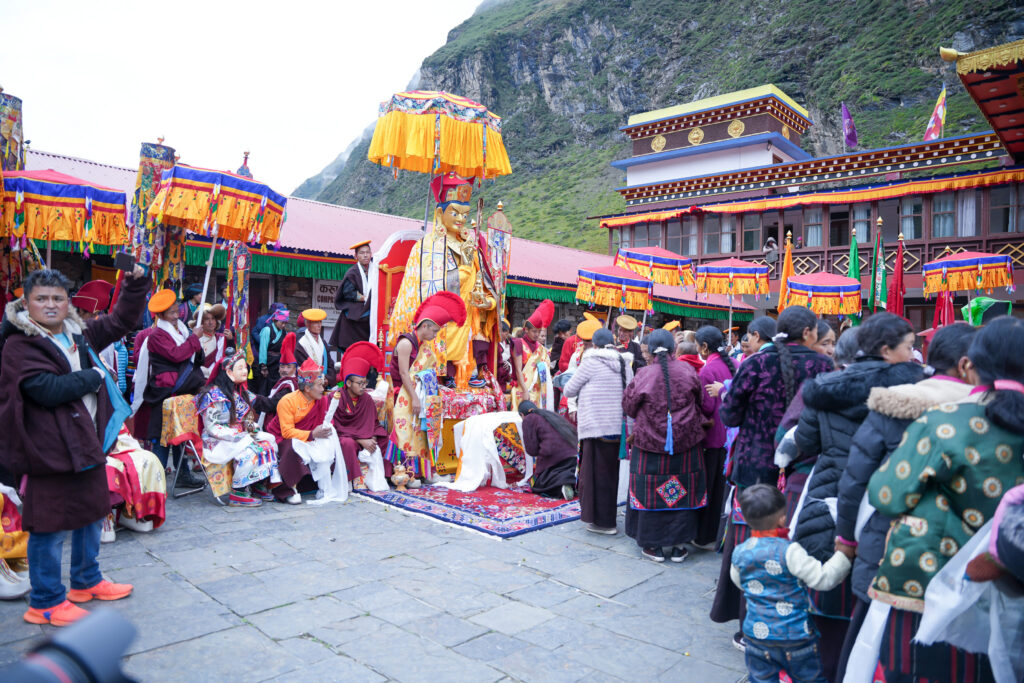
Tsechu means the “Sādhana of the Tenth Day.” It is performed on the tenth day of the tenth lunar month in the Monkey Year, commemorating the miraculous birth of Guru Padmasambhava, who is said to have arisen from a lotus at Lake Dhanakosha. According to sacred tradition, Guru Padmasambhava personally blesses this day. It is revered as an especially auspicious occasion, when prayers are swiftly answered and all sincere wishes are fulfilled.
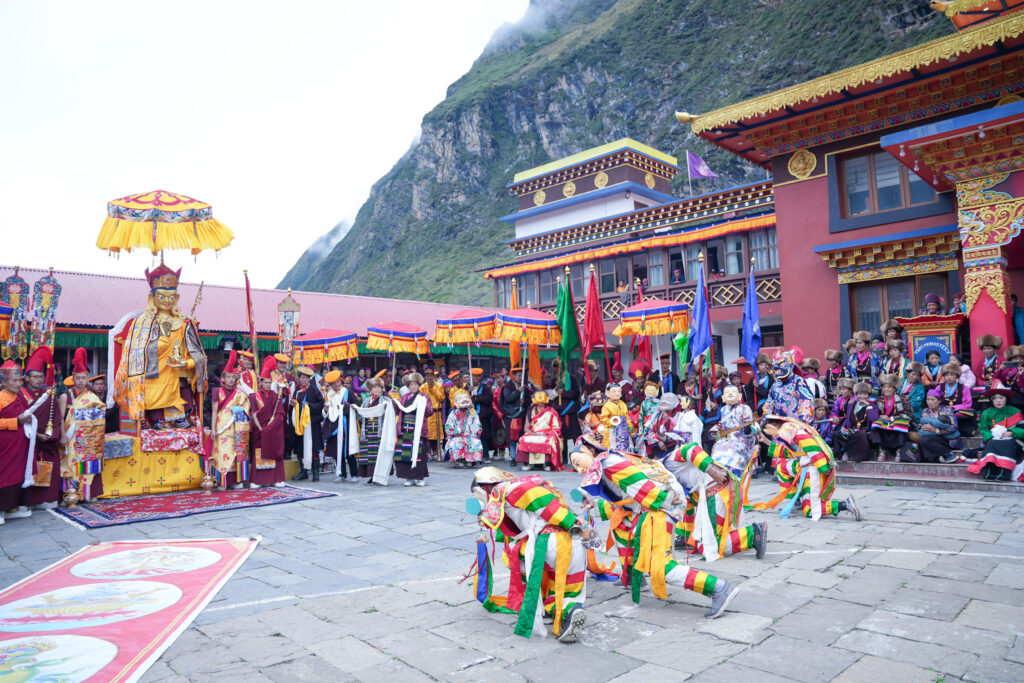
In earlier times, the Tsechu celebration in Tsum Valley was regarded with utmost reverence. A grand sādhana was performed, based on the Eighth Chapter of the Guhyasamāja Tantra, revealed through the pure vision of Tertön Guru Chöwang. Central to the ceremony was the sacred Lama Dance (cham) of the Eight Manifestations of Guru Rinpoche, as witnessed in Guru Chöwang’s vision. This practice became the source of the Tsechu Cham in many Nyingma and Kagyu monasteries.
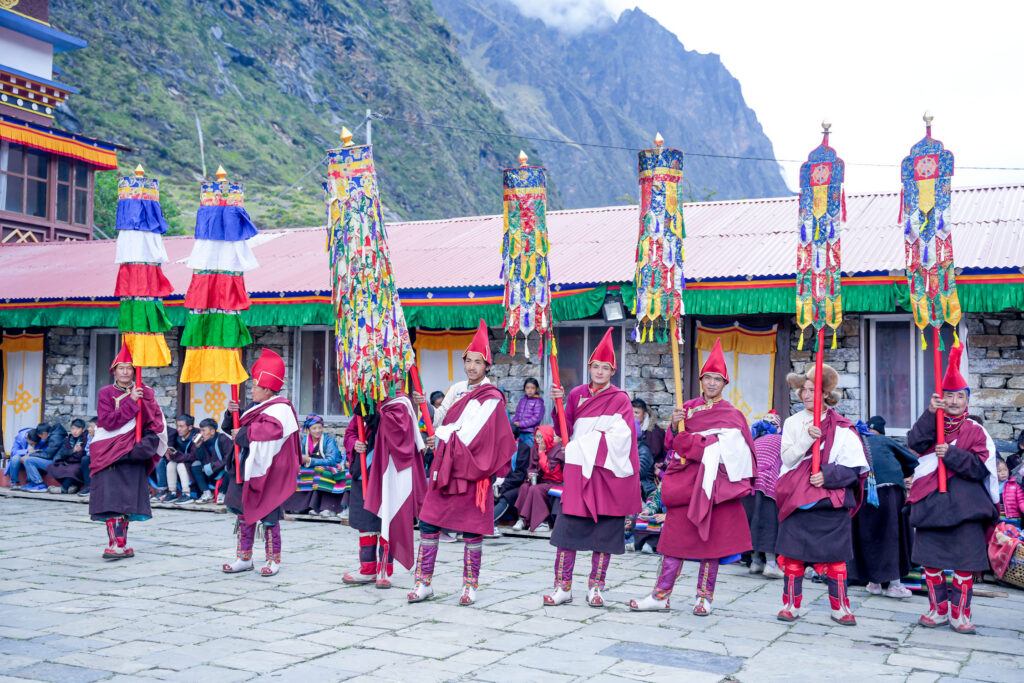
During the youth of Dungse Pema Lhabtsen Rinpoche and Dungse Tsewang Norbu, this sacred dance was performed in its complete form. It included the enactment of the Eight Manifestations of Guru Rinpoche, the Eight Female Gate Protectors, and the Four Wrathful Deities. The monks and nuns were ceremoniously received with traditional musical instruments and were seated accordingly. The procession continued with Mey Tsering, accompanied by children in traditional attire, symbolizing auspiciousness.
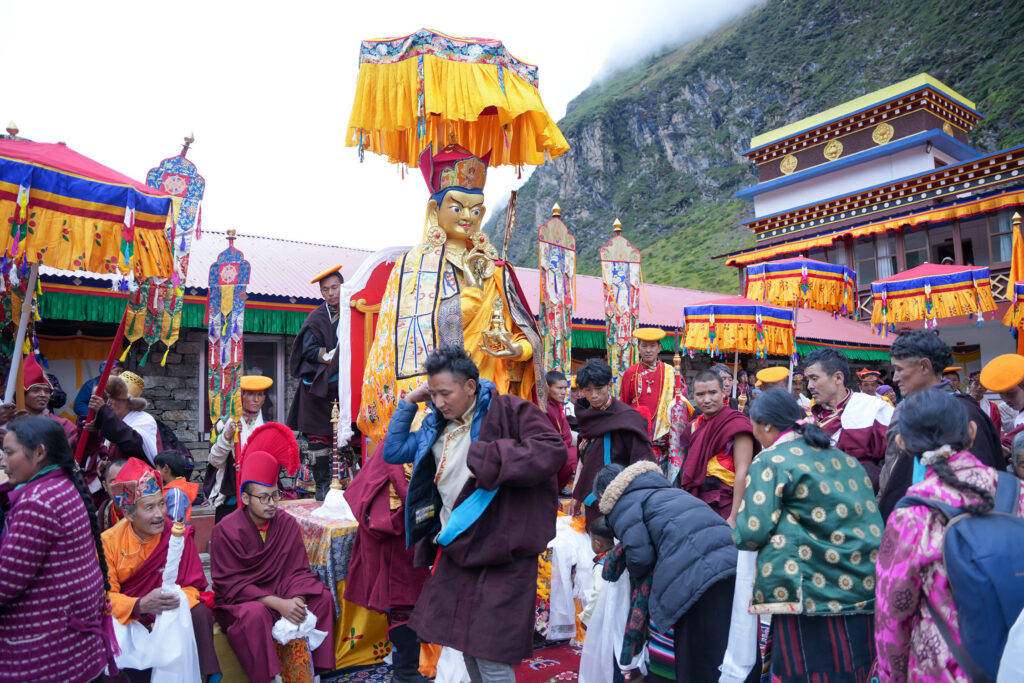
Following this, two life-sized representations of Guru Nansi Zilnon, surrounded by the King, Minister, and Dakini, would arrive in a grand procession. Various elaborate offerings were made, and finally, everyone present would receive blessings.
Unfortunately, due to unstable conditions and various challenges, this sacred ceremony was discontinued for a time being. However, since 2019, Dungse Pema Rinpoche and Dungse Lama Pasang have revived the Tsechu celebration. It is now held annually on October 10th at Tsum Monastery with renewed spirit and devotion.
In 2019, with the official inauguration of Tsum Monastery, the Tsechu Sadhana was performed with Lama Dance and elaborate traditional dances.
In 2020 and 2021, the Tsechu could not be celebrated due to the coronavirus pandemic.
In 2022, the Tsechu was held with five days of sadhana and two days of Lama Dance, followed by a play on the life of Yogi Milarepa and Phawa Jamo (the first person to arrive in Tsum), performed by the Nepal Lhamo Association. The eight manifestations of Guru Rinpoche were also displayed with elaborate musical offerings.
In 2023, the Tsechu Sadhana was observed without the Lama Dance and traditional performances due to the sorrowful Parinirvana of the 9th Thrangu Rinpoche. Teachings and prayers for His Eminence Thrangu Rinpoche’s swift return were conducted daily during the middle and final sessions, respectively, and the Vajra Guru mantra was recited every day by the people.
In 2024, the Tsechu Sadhana was held for six days, followed by one day of Lama Dance. At the request of the local Tsumpa community, Dungse Pema Rinpoche bestowed empowerments on each day of the Tsechu. Basic teachings on Buddhism were given alternately by Khenpo Tenzin Dorje and Lopon Tenzin Norbu, and the Vajra Guru mantra was recited daily by the people.
Due to the unstable dates based on the lunar calendar, many people faced difficulties in managing their time. Therefore, the organizing committee has decided to hold the event every year from October 10th to 16th.